
Features
- Brushless motor for improved performance
- Variable speed control from 10,000 to 31,000 RPM
- Micro-adjust dial for precise depth settings
- Macro-adjust button for quick adjustments
- LED lights for better visibility of the work surface
- Compatible with plunge and offset bases (sold separately)
Specifications
| Motor Type | Brushless |
| Speed Range | 10,000 to 31,000 RPM |
| Depth Adjustment | Micro-adjust dial and macro-adjust button |
| Lighting | LED work-surface illumination |
| Base Compatibility | Plunge and offset bases (sold separately) |
Related Tools
Related Articles

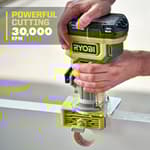
Hand-held compact router with a brushless motor and variable-speed control. Provides fine (micro) and quick (macro) depth adjustment mechanisms, integrated LED lighting for the work surface, and is compatible with optional plunge and offset bases sold separately.
Milwaukee Compact Router Review
Cordless trim routers have quietly become some of my most-used tools, and this compact router from Milwaukee earned a permanent spot on my bench within the first week. It blends real power with thoughtful controls, making it equally happy doing quick edge profiles on site or running precision joinery in the shop.
Build, feel, and balance
The housing and base feel stout, with no rattles or flex. In hand, the router sits a bit taller than some corded trim models, but the contours give you obvious places to grip with either one or two hands. Balance is good with compact packs; with a larger battery, the center of gravity climbs and you’ll feel that extra top weight on narrow workpieces. My solution was simple: I reach for a 2.0Ah or compact 3.0Ah pack for edge work and a 5.0Ah when I’m doing longer dado runs or repeated hinge mortises where runtime matters more than perfect balance.
Two LEDs do exactly what you want—light the line without glare or shadowing. The clear base keeps the bit visible, and the finish on the subbase glides smoothly across both raw and finished surfaces.
Speed and power
Under the hood is a brushless motor with a 10,000–31,000 RPM range. The speed dial is easy to thumb without shifting your grip, and there’s enough torque at lower speeds to drive a 1/4-in spiral through plywood dados without stalling. At higher speeds the router is very smooth, and cut quality on small profile bits is crisp. I routinely flush-trim solid edging and round over maple without burning, provided I set the speed appropriately and keep the bit sharp.
What stood out to me is how confidently it holds RPM under load for a compact, cordless unit. You can hear the electronics managing speed as grain density changes, and that translates to cleaner cuts and less chatter.
Depth adjustments that stay put
Depth setting is split into two systems that work well together. A macro-adjust button lets you slide the motor quickly to a rough height. Then a micro-adjust dial fine-tunes depth with excellent precision. Once you clamp the body, the setting doesn’t creep. I’ve made repeat cuts across a set of drawer fronts and returned hours later to find the depth right where I left it.
One quirk: the fine-adjust dial doesn’t independently lock. Brush it with a glove and you may wonder if you moved it. In my use, the actual cutting depth hasn’t changed after locking the body; the dial indicator is just easy to nudge. It’s more a confidence thing than a functional flaw, but it’s worth noting.
Cut quality and control
With the standard base and a compact battery, the router feels planted. One-handed edge work is comfortable, and I like how predictable it tracks against a bearing or fence. For longer straight runs, I’ll often add a larger subbase or switch to the plunge base (sold separately) to spread the footprint. That extra stability is noticeable on narrow stock and when crossing grain.
The brushless motor keeps vibration low, and the result is precise work with less fatigue. For hinge mortises, a spiral upcut at mid-range speed produced clean walls with minimal tear-out. On rabbets and dados, I prefer to take multiple shallow passes—standard practice with compact routers—and this machine rewards that approach with consistent results.
Visibility and dust management
The twin LEDs are excellent, especially when you’re working in cabinets or near walls where light is scarce. As for dust, using the clear shroud and a vac connected to the port does a better-than-average job capturing chips on straight cuts and template routing. Like all trim routers, collection drops when you’re bearing-guided on an edge with no fence, but the setup still helps keep debris off the cut line. If you do a lot of interior work, I’d call the shroud a must-use accessory.
Batteries and runtime
Runtime depends heavily on bit type, depth, and material. With a sharp 1/4-in spiral or flush-trim bit, a compact pack handles routine trim work and small joinery without drama. Step up to a 5.0Ah pack for long runs or heavy profiling and you’ll feel the extra stability from the added mass as well. I didn’t run into heat-related throttling during normal use; the motor case gets warm on extended cuts, but not alarmingly so.
Bases and expandability
Where this router separates itself is how easily it shifts roles with optional bases. The plunge base turns it into a small-format generalist that can handle stopped grooves, hinge mortises, inlay work, and template routing with more control. The offset base is handy for hardware recesses near inside corners or where the motor body would otherwise interfere. Both expand the tool well beyond quick edge breaks, and the fine-depth system carries over, so dialing in a precise depth from a test piece is straightforward.
Bit changes and the collet
Bit changes are standard fare: 1/4-in collet, two wrenches included. There’s also a spindle-lock button if you prefer a one-wrench routine. The collet on my unit was snug when new. A light clean and a couple of insert/remove cycles seated everything in, and it’s been smooth since. Two small tips:
- Back the nut off an extra quarter turn after it loosens to release the bit from the collet’s second grip.
- Long-handled wrenches make life easier, especially in awkward positions or with a flush-trim bearing close to the base.
Everyday usability
A few practical notes from regular use:
- Set your speed by bit diameter: slower for larger profiles, faster for small cutters. This router has the top-end RPM to make micro-bits shine without burning.
- Use a compact battery for one-handed edge work and sanding-sealer passes where featherweight control matters.
- Mark depth settings on a scrap when dialing in joinery; the micro-adjust makes repeatability easy, but written references speed up setup.
- If you ever feel the base wanting to tip on narrow stock, clamp on a simple shop-made auxiliary base to widen the footprint—quick insurance for clean edges.
Limitations
No compact router is perfect, and a couple of realities apply here:
- High center of gravity with larger batteries is a thing. It’s manageable, but you’ll work more comfortably with compact packs on delicate operations.
- The plunge and offset bases are sold separately. They’re worth it if you need the capabilities, but budget accordingly.
- Like most trims, this isn’t a 1/2-in-shank, large-profile machine. Heavier moldings and deep raised-panel cuts belong to bigger routers or a table setup.
Who it’s for
If you’re already on Milwaukee’s 18V platform, this compact router is an easy add that covers a surprising amount of ground. Cabinet installers, trim carpenters, flooring pros, and serious DIYers will appreciate the blend of portability, power, and precise depth control. If you’re primarily a bench-based woodworker running large bits in a table, a full-size corded router still makes sense alongside this one.
Recommendation
I recommend this compact router. It delivers corded-like performance for 1/4-in work, its depth system is both fast and precise, the LEDs and clear base keep the cut visible, and the optional bases unlock a lot of capability from a single tool. The only real tradeoff is balance with larger batteries, which is easy to mitigate by choosing the right pack for the task. If you value accuracy, portability, and a setup that stays where you set it, this router will serve you well on site and in the shop.
Project Ideas
Business
Custom carved signs & plaques business
Offer bespoke signs for homes, businesses and events using routed lettering and recesses for inlay or backlighting. Price tiers: basic routed lettering, inlay/resin accents, and premium multi-material signs. Use templates and the router's micro-adjust to keep quality consistent and expedite production.
Mobile door & cabinet routing service
Provide on-site hinge mortising, lock routing and door trimming using the plunge base for accurate, portable work. Target homeowners, property managers and installers who need quick fixes or retrofits—promote same-day service, low travel fees and guaranteed fit. The router's quick-adjust features make job-to-job setup fast.
Interior accent panels & resin inlay commissions
Combine routed recesses with epoxy resin, wood veneers and metal inlays to create statement wall panels, headboards and furniture accents for interior designers. Position as limited-run custom pieces; use the brushless motor and templates to maintain tight tolerances for high-end clients and deliver consistent repeatable panels.
Router workshops & skill classes
Teach small-group classes on router basics (safety, bit selection, jigs, dovetails/inlays) using the compact router for demos. Sell accompanying beginner kits (bits, small project blanks, templates) and record video lessons for wider reach. Hands-on workshops also generate leads for custom work.
Sell specialty jigs, templates & digital plans
Design and sell router jigs and pre-cut templates for hinge mortises, inlay patterns, edge profiles and repeatable trim work—offer physical templates, printable plans and digital CNC files. Package as beginner kits or professional toolsets; emphasize compatibility with plunge and offset bases and provide setup instructions keyed to the router's micro- and macro-adjust features.
Creative
Intricate inlay & marquetry panels
Use small straight and downcut spiral bits with the micro-adjust dial to rout precise recesses for wood, metal or brass inlays. The LED lighting helps when following fine veneer patterns; use the plunge base for consistent depth control and template-guided routing for repeatable motifs. Finish with epoxy fills or contrasting woods for tabletop art, coasters, or cabinet door panels.
Hand-carved wooden signs and lettering
Create custom signs using V-groove, round-nose and small straight bits to carve letters and small illustrations. The variable speed (10k–31k) lets you route cleanly through softwoods, hardwoods or signboard plastics; micro-adjust ensures uniform letter depth while LED improves visibility for detailed lettering. Offer weatherproof finishes and routed recesses for backing or illumination.
Decorative edge profiles for boxes & furniture
Fit the offset base and use roundover, ogee or Roman ogee bits to add consistent edge profiles to jewelry boxes, drawer fronts and small tabletops. The macro-adjust button gets you in the ballpark quickly and the micro-adjust dial lets you dial in perfect matching profiles for sets. Combine with template guides for repeatable production of matching components.
Precision mortises for hinges & hardware
Use the plunge base to rout clean, repeatable mortises for cabinet hinges, recessed locks or multi-part hardware. The brushless motor gives smooth power for clean walls, and the quick macro-adjust lets you switch depths between different hardware quickly. Make simple jigs to hold doors or frames for exact placement.
Miniature fluted columns & moldings
Produce fluted legs, trim and small moldings using straight bits and specialty profile bits at higher RPM for crisp detail. The compact router is ideal for small-scale work like dollhouse furniture, clock surrounds or decorative appliqués; use micro-adjust for uniform flute depth and the LED to check cutter engagement and tearout.