
Features
- Fires up to 3 nails per second
- Zero ramp-up time
- Completely battery operated
- Dry fire lockout
- On-board hex key storage
- Sequential and contact actuation firing modes
Related Tools
Related Articles
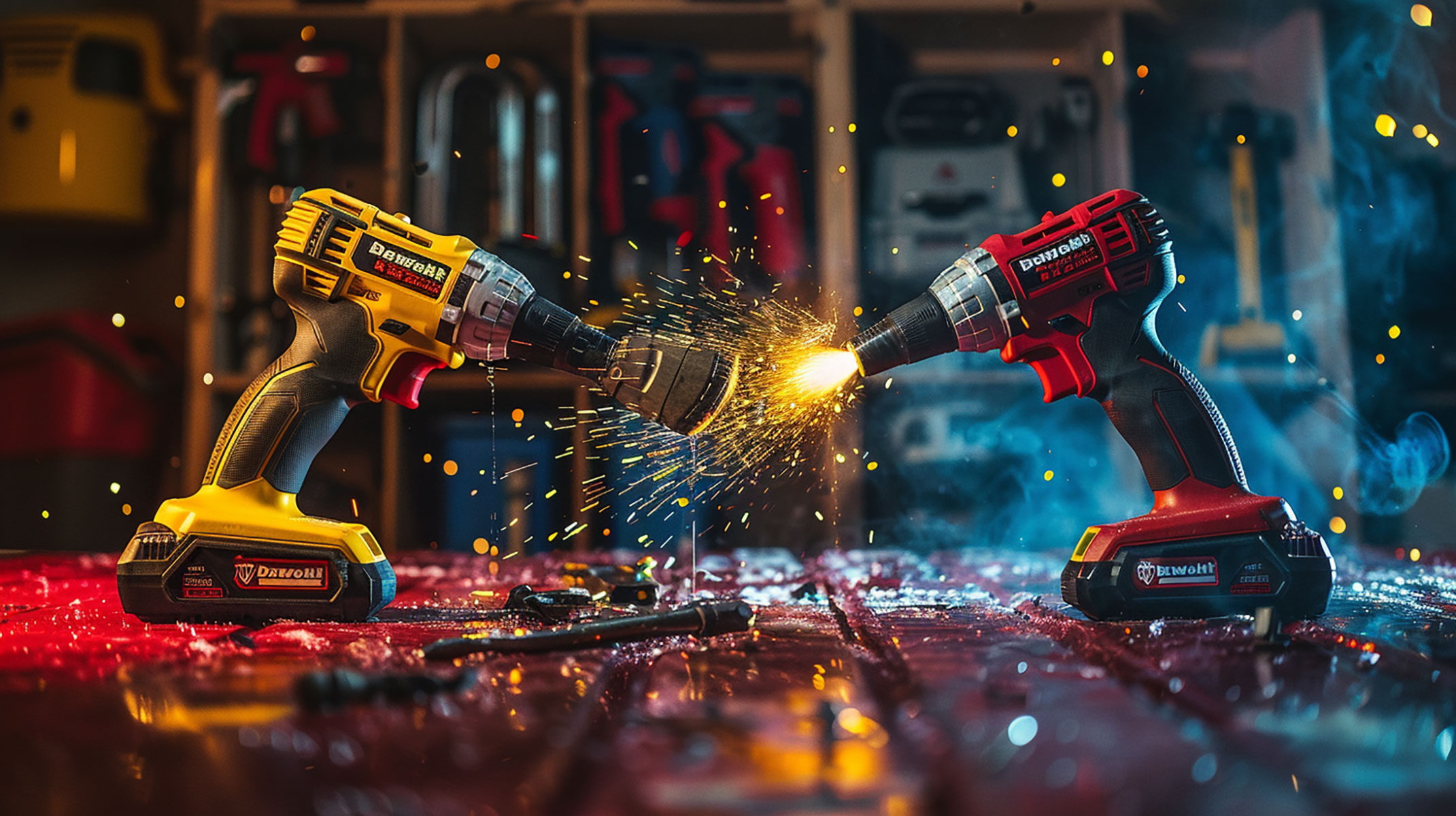
Cordless 30-degree framing nailer for driving framing nails in construction and carpentry tasks. Operates from battery power, offers both sequential and contact actuation firing modes, and includes safety and maintenance features such as dry-fire lockout and onboard hex key storage. Rated to drive up to three nails per second and does not require a ramp-up period before firing.
Milwaukee 30 Degree Framing Nailer Review
First impressions and setup
I put this 30-degree nailer to work the way most carpenters will: framing a couple of partition walls, hanging some headers, and building out a small deck and stairs. Coming from years of running hoses and a pancake compressor, the immediate advantage was obvious—no setup time, no noise from a compressor cycling, and no air hose to manage or trip over. Drop in a battery, load a strip of 30-degree paper-tape nails, and it’s ready.
Controls are straightforward. A large depth-of-drive wheel on top is glove-friendly, and the toggle for sequential or contact actuation (bump) sits right where you’d expect it. The dry-fire lockout works as advertised; it stops the tool before you’re mashing blanks into wood and wondering why your last few nails didn’t sink. There’s onboard hex key storage for clearing a jam—handy, and I actually used it once.
Power and speed in real lumber
This nailer has legitimate muscle. With 3-inch ring-shank nails, I was consistently flush in pressure-treated southern yellow pine without predrilling. In SPF studs and double top plates, it buried nails slightly proud on the default setting; a few clicks back on the depth wheel dialed in perfect flush. On engineered lumber (LVL rim), I needed to press the nose firmly and run the depth a little hotter, but it still set 3-inch nails cleanly.
Milwaukee rates it at up to three nails per second with zero ramp-up. I can’t speak to a stopwatch, but it fires instantly with no spin-up or pause, and in short bursts I was comfortably bumping in the 2–3 nails-per-second range without outpacing the tool. Recoil feels tight and controlled—noticeable, but predictable—so placing shots quickly and accurately isn’t a chore.
Toe-nailing is solid, too. The contact tip has enough bite to stay put on an angle, and the line of sight to the nose is better than most cordless framers I’ve used. Keep the shoe firmly planted and it’ll drive at awkward angles without skating.
Ergonomics and balance
Cordless framers are heavier than pneumatics; that remains true here. With a compact 3.0Ah pack, the balance is decent and the center of gravity lands just forward of the grip. Swap to a 5.0 or 6.0Ah battery and the overall heft becomes noticeable in overhead or ladder work. I preferred running a 3.0Ah High Output pack for better balance, then swapping batteries as needed. For extended, all-day overhead nailing, a pneumatic still wins on fatigue.
The rafter hook is stout and sized right for hanging off a 2-by. The LED work light is brighter than it needs to be (a good thing under decks and in basements), and the rubber overmold on the grip holds up well to sweat and dust. Noise is lower than most gas-actuated tools; ear pro is still smart, but conversations aren’t impossible between shots.
Magazine and nail management
Out of the box, the magazine only holds one strip of nails. If you’re used to twin strips in a pneumatic, you will be reloading more often. There’s an extended magazine accessory that solves this and, in my opinion, transforms the day-to-day experience—especially when you’re sheathing or running long walls. Loading is simple and positive with a reliable follower spring, and the dry-fire lockout consistently saved me from driving the last few nails short.
Compatibility-wise, I ran standard 30-degree paper-tape, offset round-head strips in 2-inch through 3-1/4-inch without issue. As with any cordless framer, stick to quality fasteners and keep them dry; paper-tape that’s softened or nails that are out of spec are a great way to invite jams.
Battery life
Battery life is better than I expected for a tool with this much punch. On a 5.0Ah pack, I got through a couple hundred nails of mixed-length framing and sheathing with plenty left. On punch-list days—blocking, small walls, and a bit of decking—a 3.0Ah lasted me several hours. If you’re framing all day, plan on two batteries in rotation and you won’t be thinking about power. My preference: a compact 3.0Ah for balance most of the time, and a 5.0Ah when I know I’ll be stationary and driving continuously.
Reliability and maintenance
Over several projects, I put a little north of a thousand nails through this nailer. I had one jam (a slightly bent nail from a dropped strip) that I cleared by popping the battery, dropping the magazine, and using the onboard hex key to open the nose. Total downtime: under five minutes. I also had one instance where the battery LEDs blinked after a hard bump-fire run; reseating the battery cleared it and it didn’t return.
A few care tips that helped keep things smooth:
- Seat the contact tip firmly before firing—cordless framers appreciate consistent nose pressure.
- Keep the nose and magazine blown out; a quick blast of compressed air at the end of the day goes a long way.
- Don’t run it bone-dry; the lockout protects the tool, but habitually slamming into wood at empty isn’t great for any nailer.
- Use straight, dry, quality strips. Paper-tape and humidity don’t mix.
Everyday usability
The switch between sequential and bump is instant, and I used both modes constantly—sequential for layout-critical shots and tight corners, bump for decking and sheathing. The depth wheel is the quiet hero here; it’s fast, repeatable, and doesn’t drift under vibration. Line-of-sight to the tip is good enough to split a layout mark reliably, and the tip profile is friendly for toe-nailing without marring softwood too badly.
If there’s a workflow complaint, it’s the magazine capacity out of the box. The constant reloads on production tasks interrupt your rhythm just enough to notice. Add the extended magazine and that gripe largely disappears.
How it stacks up against air
- Speed: You lose almost nothing in firing speed compared to a good pneumatic when you’re working in bursts. For sustained, all-day-production bump-firing, air still holds a small edge.
- Weight: Pneumatics are lighter; there’s no getting around it. But losing the hose offsets that in many real-world scenarios—especially remodels and tight interior jobs.
- Consistency: Drive depth was on par with my favorite air gun once dialed in. The cordless motor’s instant hit gives consistent results across different species and orientations.
- Convenience: No compressor, zero setup time, and no power source required at the site are big wins.
Wish list
- Include the extended magazine or at least offer a kit option with it; this tool deserves two-strip capacity for production work.
- Trim a bit of weight if possible, or continue optimizing balance with compact high-output packs.
- A slightly more aggressive nose would make toe-nailing into dense engineered lumber even more confident.
The bottom line
This 30-degree nailer delivers what most of us actually want from a cordless framer: instant firing, real power on 3-inch nails in tough lumber, smart features like dry-fire lockout, and a depth control that stays put. It is heavier than an air gun, and the single-strip magazine out of the box means more frequent reloads, but the time saved by ditching the compressor and hose more than made up for those trade-offs on my jobs.
Would I recommend it? Yes—with a couple of caveats. If you’re already on Milwaukee batteries and you value the freedom to frame anywhere without dragging air, this nailer is a strong, reliable daily driver. Add the extended magazine if you do long runs, pair it with a compact 3.0Ah or a 5.0Ah battery depending on balance versus runtime, and keep quality nails on hand. For high-volume, all-day production framing where every ounce and every reload counts, a lightweight pneumatic still has advantages. For remodelers, service carpenters, and anyone who wants serious cordless capability with minimal compromise, this one earns a spot on the rack.
Project Ideas
Business
Mobile Deck & Porch Installation Service
Offer a local service building and renovating decks/porches with rapid turnaround. The cordless framing nailer increases jobsite efficiency (up to 3 nails/sec) so you can complete projects faster and take more jobs per week. Promote fast scheduling and on-site flexibility as your competitive advantage.
Quick-Build Shed & Tiny-Structure Kits
Produce pre-cut shed or tiny-structure kits and offer an add-on on-site assembly service. The framing nailer makes quick work of repetitive framing connections; advertise same-day installation options. Kits can be sold to DIYers who can rent or borrow the tool to complete the project themselves.
Subcontract Framing for Renovators
Run a small framing crew specializing in interior wall and roof framing for general contractors and remodelers. The tool’s sequential/contact firing modes let crew members switch between speed and precision as needed, and the dry-fire lockout reduces wasted trips for reloading during critical timelines, improving productivity and margins.
Tool Rental + Training Bundles
Start a rental program for high-quality cordless framing nailers coupled with short training sessions. Renters get the convenience of battery operation without purchase, and a 30–60 minute safety/technique class increases tool returns and reduces liability. Include basic maintenance (onboard hex key for quick adjustments) as part of the package.
Hands-On DIY Workshops
Host paid workshops teaching homeowners to build outdoor projects (benches, planters, small sheds) using framing techniques. Use the nailer to demonstrate professional methods, emphasize safety features like dry-fire lockout, and upsell tool-sales, plans, or assembly services to participants looking for finished results.
Creative
Rustic Pallet Furniture Set
Build a coordinated outdoor furniture set (bench, coffee table, side table) from reclaimed pallets and dimensional lumber. Use the 30° framing nailer to rapidly tack thick pallet boards and frames together — contact actuation for quick repetitive nailing during fabrication, sequential mode when you need precise placement. Battery operation lets you work wherever the pallets are stored, and onboard hex key storage keeps adjustments handy.
Backyard Pergola or Arbor Kit
Design and construct a medium-sized pergola or garden arbor as a weekend project. The nailer’s ability to fire up to three nails per second and zero ramp-up time speeds up assembly of rafters and support beams, while dry-fire lockout prevents damaging missed nails in overhead work. Create downloadable plans and sell the assembled pieces or DIY kits.
Kids’ Playhouse / Treehouse
Build a customized playhouse or simple treehouse using sturdy framing techniques. The framing nailer makes fastening larger studs, plates, and sheathing quick and reliable — use sequential mode for controlled single-nail placement when kids’ safety details matter. Battery power and portability mean you can build on-site in the yard without extension cords.
Sliding Barn Door & Large Picture Frames
Create oversized interior features like reclaimed-wood sliding barn doors or chunky picture frames/mantel surrounds. The framing nailer handles thicker material and repetitive fastening easily; zero ramp-up ensures you can switch between tasks quickly. The onboard hex key is handy for quick depth or tip adjustments during the build.
Pop-up Market Booths and Event Structures
Design modular, reusable frames for farmer’s market booths, craft fair displays, or outdoor event signage. Use the nailer for fast assembly and disassembly on location — battery operation eliminates the need for generators, and contact mode speeds repetitive fastening while dry-fire lockout reduces surprises mid-event.