Features
- Brushless motor for efficient cutting
- Adjustable shoe for enhanced control
- Integrated LED light for visibility in dark areas
- Hanging hook for convenient storage
Related Tools

Related Articles

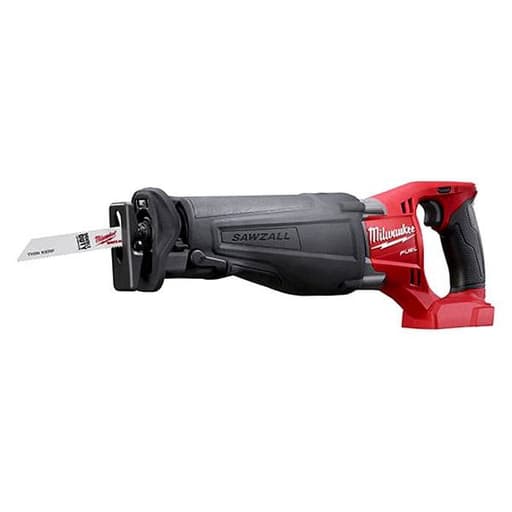
Handheld reciprocating saw designed for general cutting tasks. It uses a brushless motor to improve efficiency and motor life. The adjustable shoe helps control cutting depth and provides stability. An integrated LED light aids visibility in low-light areas, and a hanging hook allows convenient storage when not in use.
Milwaukee Reciprocating Saw Review
A compact brute that rewards good technique
I put this recip saw to work on a bathroom gut—studs, nail-embedded subfloor, copper and ABS, a few errant deck screws hiding in drywall furring—the usual surprises. What stood out first wasn’t just speed; it was control. With the right blade, the saw feels eager but not unruly, letting me ease into cuts and then pour on the power when the shoe is planted. That balance of punch and finesse is what makes demolition faster and cleaner, and it’s where this model earns its keep.
Design, balance, and comfort
The form factor is trimmer than many pro-grade cordless recip saws, and it’s noticeable the moment you get it overhead or need to reach across a stud bay. The handle angle, overmold, and trigger feel dialed; I can run it one-handed for short cuts without the front end diving on me. With a mid-size battery, the center of gravity sits right under my trigger hand, which reduces wrist torque when you’re pivoting around the shoe.
The integrated LED sits where it actually helps—low and forward—so you can see your line without a harsh hotspot. The hanging hook is stout and placed well; I parked it on joists and ladder rungs all day without it feeling like an afterthought.
Vibration is controlled for a straight-stroke saw. You still feel the thrum you expect when chewing through naily lumber, but the chassis doesn’t buzz your hands numb. If you’re used to heavier corded models with very soft mounts, you’ll notice a bit more feedback here; the payback is nimbler handling and less weight.
Power and cutting performance
This brushless platform hits a sweet spot: fast in wood, confident in metal, and predictable when you need to feather the trigger. You don’t get orbital action on this model, so the cutting character is linear rather than aggressive-swing. That means:
- In clean framing lumber, it’s quick but not reckless; the blade stays on line and doesn’t hop.
- In nail-embedded or layered materials, the steady stroke helps the teeth keep purchase instead of skating.
- In metal, especially EMT and copper, the smooth stroke is a plus—cuts start without chatter.
Plant the adjustable shoe and it really wakes up. In 2x spruce with 6–8D nails, I could lean into it and let the long stroke do the work without bogging. In 3/4-inch black pipe (with a dedicated metal blade), it didn’t stall or overload; it just kept pace. On plunge cuts, it’s best to start slow and let the teeth nibble a pocket before ramping up. When I pinched the blade hard in a tight dado, I could get a brief start-up hesitation; easing off pressure and re-seating the cut cleared it. That’s typical recip behavior, but it’s a reminder that technique matters if you want the electronics to stay happy.
Runtime and battery pairing
I split my time between a compact 5.0Ah pack and a high-capacity pack. Here’s how they stacked up for me:
- 5.0Ah: Best balance and control, especially overhead and in-wall. I could get through a room’s worth of mixed demo (studs, drywall furring, light plumbing) on a single charge with smart trigger use.
- High-capacity: Adds noticeable weight but extends sustained floor-level demo. If you’re ripping out doubled-up sole plates all afternoon, the extra minutes per pack are worth it.
A quick note on behavior: if you swap hot packs mid-cut and jam the trigger immediately, I’ve seen the tool’s protection circuit pause for a beat. Clicking the battery in firmly and giving it a second before pulling the trigger prevented the hiccup for me.
Adjustments that matter
- Adjustable shoe: The ratcheting shoe is more than a depth gauge—it’s a blade saver. Move it out to change the contact point on the teeth and you’ll squeeze more life out of every blade. It also gives you a solid fulcrum for cleaner plunge starts.
- Blade changes: The lever-style clamp is glove-friendly and positive. I appreciate that it feels tight even after a few weeks of dusty demo; a quick blast of air keeps it snappy.
- LED and hook: Simple, useful, positioned well. The light lands where it should, and the hook is beefy enough to trust on a rafter.
Durability and care
The chassis and rails feel reinforced in the right places. I’ve bounced it around in a demo cart, tossed it on subfloor, and I’m not seeing the battery interface loosen up or the shoe wobble. The blade clamp has held tension and hasn’t chewed up shanks, which tells me the interface is wearing properly.
That said, recip saws live hard lives, and this one is no exception to basic physics and moisture. Two care notes:
- Debris: Dust and chips collect around the clamp. Blow it out and add a tiny drop of light oil to the latch pivot now and then. It keeps insertions smooth and ejections positive.
- Water: This tool isn’t sealed for prolonged wet work. Cutting overhead sprinklers or live plumbing that drenches the nose can migrate moisture into the mechanism and invite corrosion. If you must cut wet, dry it immediately, cycle the clamp open/closed to purge water, and hit it with compressed air. I’ll also wipe a light oil on the shoe hinge and clamp face after a soggy day.
Treat it like a precision demolition tool rather than a submersible and it holds up well.
What it does best
- Remodel demo where material changes every cut—studs, nails, roofing, PVC, occasional nonferrous metal
- In-wall and overhead cuts that reward lighter, balanced tools
- Controlled, straight cuts where you want to avoid the sometimes-wild bite of orbital action
Where it could be better
- No orbital mode: If your day is mostly clean, fast rip cuts through framing lumber, an orbital recip will be faster. This one trades a bit of raw speed for accuracy and versatility.
- Moisture tolerance: I’d love to see more corrosion resistance in the nose for plumbers and fire sprinkler techs who get wet often.
- LED shadow: With the shoe fully retracted, the light can throw a small shadow right at the start of the cut. Not a deal-breaker, but noticeable.
Blade pairing tips
A good recip saw is only as good as the blade you clamp into it:
- Wood demolition: 5–7 TPI, variable pitch, thick body blades resist flex. Keep the shoe tight to the work and let the teeth pull.
- Nail-embedded: Bi-metal or carbide teeth. Carbide costs more, but the saw’s smooth stroke makes the most of them.
- Metal: 14–18 TPI for EMT and copper; go finer for stainless. Start slow to avoid work-hardening and keep the shoe planted to minimize chatter.
- Plunge cuts in sheathing: Use a short, stiff blade, toe the shoe, and ease into the trigger.
The bottom line
This saw hits the mark for a do‑everything, jobsite‑ready recip that’s lighter than the old-school brutes yet powerful enough to be your daily driver. It favors control, smart ergonomics, and consistent power delivery over headline-grabbing aggression. In real‑world demo, that translates to straighter cuts, fewer chewed-up blades, and less fatigue by day’s end.
I recommend this tool. It’s a dependable, compact workhorse that shines in mixed-material demo and tight spaces, with thoughtful touches like an adjustable shoe, a useful LED, and a sturdy hook. Pair it with the right blades and a mid-size battery for most tasks, reach for a high-capacity pack on longer floor-level sessions, and keep the nose clean and dry. If you primarily cut soaking-wet plumbing or demand orbital speed through clean lumber all day, you’ll want to consider a different configuration. For everyone else—remodelers, electricians, HVAC crews, and serious DIYers—this is a smart, capable choice that earns its spot in the kit.
Project Ideas
Business
Selective Interior Demolition Service
Offer targeted demolition jobs (bathroom/kitchen tear-outs, drywall removal, window removals) for remodelers and homeowners. The reciprocating saw excels at controlled cuts near studs, flush cuts with the adjustable shoe, and cutting plumbing/metal framing; its brushless motor reduces downtime. Market quick turnarounds and clean, precise demo that preserves salvageable materials for resale.
Mobile Emergency Tree & Storm Cleanup
Provide rapid-response branch and limb removal after storms for homeowners and small municipalities. The reciprocating saw is fast for pruning, cutting roots, and trimming branches where chainsaws can't reach safely. Lightweight, low-maintenance brushless motor tools allow quicker job completion and the integrated LED helps early-morning or late-evening calls.
Upcycled Furniture Line
Produce and sell a line of rustic/upcycled furniture (tables, benches, shelves) made from reclaimed wood and metal. Use the reciprocating saw for disassembly of salvage, rough cutting to size, and metal pipe trimming. Emphasize sustainable sourcing and fast production turnaround enabled by the tool's speed and durability to attract boutique retailers and online shoppers.
Handyman & Retrofit Specialist
Build a service focused on quick in-home fixes and retrofits—under-sink pipe adjustments, HVAC duct modifications, cutting out rotted framing, and emergency boarding. The saw's adjustable shoe allows safer flush cuts in tight spaces, LED lighting helps in basements/crawlspaces, and the brushless motor means fewer interruptions. Offer flat-rate diagnostics and same-day small jobs to generate repeat local business.
Custom Metal & Garden Art Studio
Create and sell small-run metal planters, yard sculptures, and architectural accents using cut pipe, angle iron, and reclaimed metal. The reciprocating saw with metal blades enables rapid prototyping and short production runs without expensive metal-cutting gear. Position products at farmer's markets, garden centers, and online with custom size/color options and quick turnaround.
Creative
Reclaimed Wood Slab Coffee Table
Use the reciprocating saw to rough-cut salvaged slabs and boards to size, trim live edges, and make shallow notches for legs. The adjustable shoe helps control cutting depth for safer, straighter cuts on uneven reclaimed pieces; the brushless motor gives the runtime and torque to bite through dense hardwood. Finish with sanding, epoxy fills for cracks, and hairpin or turned legs for a rustic modern centerpiece.
Rustic Log Bench / Stump Stool
Turn storm-felled logs into benches or stools by crosscutting sections, flattening seats with the adjustable shoe for consistent depth, and cutting mortises for leg joinery. The reciprocating saw lets you cut through knots and root flares quickly; the LED helps when working inside a dim garage. Seal and sport-sand for outdoor durability or upholster the top for indoor use.
Branch & Metal Garden Trellis
Combine pruned hardwood branches and metal pipe to build an organic trellis or arbor. Use the saw to trim live branches to length and to cut metal pipe for frame pieces—blade choice lets you switch between wood and metal. The brushless motor handles sustained cutting without bogging down, and the light is handy for late-evening assembly in the yard.
Upcycled Pallet Planter Boxes
Break down pallets with the reciprocating saw to produce rough boards, cut joints, and make drain holes or planter notches. The adjustable shoe makes controlled plunge cuts for precise vents and drain slots, while the hanging hook keeps the tool accessible between cuts. Finish with weatherproofing and decorative stencils for a market-ready product.
Industrial Pipe Shelves & Home Decor
Create shelving, lamp stands, or towel racks using threaded pipe and reclaimed wood. Use the reciprocating saw to cut pipe to length and to trim wood shelving pieces quickly. The saw's power and blade adaptability speed up repetitive cuts; the LED helps when working inside closets or basements during installation. Assemble with flanges and simple hardware for a trendy industrial look.