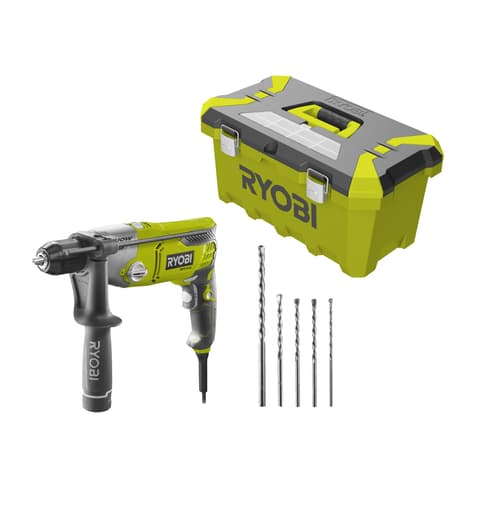
Features
- 1010 W motor
- Two-speed gearbox
- Hammer (percussion) function
- 13 mm metal chuck
- Variable speed control
- Lockable switch for continuous operation
- Forward/reverse control
- Metal gear housing
- 360° rotating side handle
- Soft-grip handle areas (GripZone)
- Includes depth stop and transport case
Specifications
| Power (W) | 1010 |
| Chuck Capacity (Mm) | 13 |
| No Load Speed (Gear 1) (Rpm) | 0–1,200 |
| No Load Speed (Gear 2) (Rpm) | 0–3,200 |
| Impact Rate (Gear 1) (Min⁻¹) | 0–19,200 |
| Impact Rate (Gear 2) (Min⁻¹) | 0–51,200 |
| Max Drilling Diameter, Wood (Mm) | 25 / 50 |
| Max Drilling Diameter, Steel (Mm) | 8 / 13 |
| Max Drilling Diameter, Stone (Mm) | 16 / 20 |
| Weight (Kg) | 3.05 |
| Sound Pressure Level D B(a) | 98.5 |
| Sound Power Level D B(a) | 109.5 |
| Vibration Level Drilling Into Concrete (M/S²) | 15.5 |
| Vibration Level Drilling Into Metal (M/S²) | 6.3 |
| Vibration Level (Screwing) (M/S²) | 2.3 |
| Included Accessories | Transport case; depth stop |
Related Tools
Related Articles
Impact drill with a 1010 W motor, two-speed gearbox and hammer (percussion) function. Offers variable speed control, forward/reverse rotation and a lockable switch for continuous operation. Fitted with a metal gear housing, 13 mm metal chuck and a 360° adjustable side handle. Supplied with a depth stop and transport case.
Ryobi Impact drill (1010 W) in transport case Review
I reached for Ryobi’s impact drill to mount cabinets, drill anchor holes in block, and chase a handful of big holes through studs. It’s a straightforward, corded hammer drill with a stout 1010 W motor, a two‑speed gearbox, and a proper metal 13 mm chuck. The combination gives it the kind of steady, line‑powered grunt you want when cordless stalls or when you’re staring down a long session on masonry.
Build and ergonomics
The first impression is metal where it matters. The gear housing is aluminum, and the 13 mm chuck is all metal. That translates into less chuck slip with larger shanks and a confidence you don’t always get from plastic-nosed units. At about 3.05 kg, it’s not featherweight. The balance is a bit nose‑heavy—common with corded hammer drills—so the included 360° side handle isn’t optional in hammer mode; it’s essential. I liked the handle’s infinite rotation and positive clamping. It lets you set your leverage point precisely whether you’re drilling overhead, on a vertical face, or at workbench height.
Ryobi’s soft-grip zones keep it from feeling harsh in the hand, and the main trigger pull is predictable. The lock-on switch is useful for continuous work like brushing or mixing, though I kept it off during drilling where I want instant control.
Powertrain and controls
Two mechanical gears plus variable speed on the trigger give you a broad working range:
- Gear 1: 0–1,200 rpm, 0–19,200 bpm
- Gear 2: 0–3,200 rpm, 0–51,200 bpm
I treated Gear 1 as the “torque gear” for large bits in wood and for tougher masonry. Gear 2 is the “speed gear” for small diameter work and rapid pilot holes. The forward/reverse switch is crisp and sits where you expect it, making stuck-bit backout painless.
Wood and metal performance
With a 32 mm spade bit in SPF studs, Gear 1 powered through cleanly without stalling. You can feel the 1010 W motor digging in; it stays steady as long as you let the bit clear chips. With a 22 mm Forstner, it was happiest at lower trigger travel and steady feed pressure—again in Gear 1. Ryobi lists up to 50 mm in wood under the right conditions, and I’d qualify that: hole saws at that size are realistic if you keep the speed in check and the saw sharp, but you’ll want both hands on the tool and the side handle locked.
In mild steel plate, I ran 6–10 mm HSS bits with cutting fluid. Gear 2 starts cleanly for center punching and initial bite; I shifted to Gear 1 once the bit diameter hit 8 mm to keep the speed down and torque up. The all‑metal chuck grips round shanks well, and I didn’t experience any walk once the bit was fully seated. Rated capacity in steel is up to 13 mm, and the motor has enough torque to get you there if you respect RPM and lubricant.
Masonry and hammer action
This is where the Ryobi impact drill earns its keep for generalists. The percussion mechanism is on the aggressive side for a keyed-chuck hammer drill, hitting up to 51,200 bpm in high gear. In older clay brick with 6–10 mm masonry bits, Gear 2 made fast, clean holes for wall plugs without overheating. In cured concrete, Gear 1 felt better and more controlled. With 8 and 10 mm bits I could keep a steady rhythm; dust evacuation is key, and short pecking cycles helped. The rated max in stone/masonry tops out at 16–20 mm; that aligns with my experience—12 mm anchor holes are no drama, 16 mm is doable with patience and a sharp bit, but beyond that I’d reach for an SDS‑Plus rotary hammer.
Important caveat: as with any percussion drill of this class, vibration and noise are significant. Ryobi lists 15.5 m/s² vibration drilling into concrete and a 98.5 dB(A) sound pressure level. That’s not marketing fluff—plan for hearing protection and limit long, uninterrupted runs. Anti‑vibration gloves help, and the side handle reduces the white‑knuckle grip that leads to fatigue.
Heat management and duty cycle
Under sustained hammer drilling, the gearbox and front housing get warm—no surprise with a metal case that conducts heat. I didn’t hit thermal limits, but I did build short breaks into long masonry sessions to preserve the bit and the tool. In continuous wood drilling without hammer, it runs cooler. Either way, use sharp bits and let the tool do the work to avoid cooking the grease out of the nose.
Chuck and bit retention
The metal 13 mm chuck is the right choice here. It grips securely and doesn’t loosen under percussion, which is something I’ve fought on lighter-duty hammer drills. Bit changes are quick, and the chuck can take longer shank masonry bits without complaint. If your work leans heavily toward SDS carbide, this isn’t that interface—you’re choosing the versatility of a standard chuck over the faster hammering of an SDS.
Small touches that help
- Depth stop: Simple, rigid, and more useful than you’d think, especially for consistent plug depths in masonry or shelf-pin drilling in cabinets.
- Lock-on switch: Handy for wire wheels or light mixing. I’d caution against locking on in hammer mode—keep your reflexes available.
- 360° side handle: Easy to reposition, doesn’t creep once tightened.
What I’d change
- Weight and nose bias: The 3.05 kg mass is to be expected given the metal build, but overhead work gets tiring. A slightly longer main handle or a marginally lighter chuck would improve balance.
- Vibration isolation: That’s the nature of percussion drills, but a bit more damping in the main grip would be welcome for users who drill a lot of concrete and don’t want to invest in SDS.
- Cable strain relief and length: The strain relief is fine, but I’d prefer a longer cord on any corded drill intended for site work. You’ll likely be on an extension cord anyway.
Who it’s for
If you need one corded drill that can credibly handle wood, metal, and occasional masonry, this Ryobi fits well. It’s a capable shop and jobsite companion for cabinetry installs, fixture mounting, anchor setting in brick or block, and larger‑diameter woodworking tasks where a compact cordless can bog down. If your week is filled with concrete anchors or core drilling, step up to an SDS‑Plus rotary hammer; that’s a different tool class. If you rarely drill masonry and value absolute portability above all, a modern brushless cordless drill/driver might suit you better.
The case and kit
The transport case is basic but appreciated. It keeps the drill, side handle, and depth stop together and offers enough room for a small set of bits. The molded pockets aren’t fussy, so you can stash a short masonry set and a spade bit or two without playing Tetris.
Bottom line
The Ryobi impact drill brings real corded muscle, a durable metal build, and practical controls to general-purpose drilling and light hammer work. It excels at small to mid‑diameter masonry holes, larger wood bores in low gear, and steady metal drilling where consistent mains power beats battery sag. Noise and vibration are inherent to the category, and the weight will wear on you overhead, but neither is out of line for a 1 kW hammer drill with a metal chuck and gearbox.
Recommendation: I recommend it for DIYers and trades who want a versatile, corded drill/hammer that prioritizes durability and control. It’s not a replacement for an SDS‑Plus if concrete is your main job, and it’s not as effortless overhead as a compact cordless. But as a reliable, all‑rounder with real power and a proper metal chuck, it earns its spot in the kit.
Project Ideas
Business
Mobile handyman / small renovation service
Offer on-site services for drilling, anchoring, and light demolition tasks that require a heavy-duty drill. The 1010 W motor, hammer function, and included transport case make the tool ideal for a mobile setup. Charge per-job or hourly rates for tasks like installing shelves, anchors, and fixtures.
Masonry drilling and anchor installation subcontracting
Specialize in installing anchors, through-bolts, and fixtures into concrete and brick for contractors or homeowners. Leverage the drill's high impact rate, depth stop, and side handle for precise, repeatable holes. Offer packaged quotes for bulk anchor installation on small building jobs or sign/mounting projects.
Custom furniture and fixture production
Use the drill in a small shop to produce bespoke pieces (tables, shelving, commercial fixtures) that require reliable metal and wood drilling. Market finished pieces online or sell to local boutiques; emphasize precision features like variable speed and depth control to ensure consistent joinery and threaded insert installation.
Tool rental for DIY homeowners
Run a short-term rental service for serious DIYers who need a powerful drill for weekend projects. Package the drill in its transport case with recommended bit sets and safety gear. Charge daily/weekly rates plus a deposit; promote the hammer function and metal chuck capacity as selling points for heavier tasks.
Hands-on weekend workshops
Host workshops teaching homeowners how to tackle common projects (mounting shelves, installing anchors, making simple furniture). Provide this drill for participants to use during classes — highlight safety, proper bit selection, and using the depth stop and lockable switch. Monetize via class fees and optional sales of starter bit/accessory kits.
Creative
Reclaimed-wood coat rack with metal bolt accents
Build a wall-mounted coat rack from reclaimed timber, using the drill's 13 mm chuck to bore precise holes for large carriage bolts and dowels. Use variable speed and the depth stop to avoid punching through thinner slats, and the hammer off for clean wood drilling. Add metal brackets fastened with through-bolts for an industrial look.
Masonry planters and garden edging
Create small concrete or brick planters by drilling drainage holes and through-holes for rebar or threaded rod. The hammer (percussion) function and high impact rate let you quickly penetrate stone and brick; the 360° side handle gives control when drilling at awkward angles. Finish with sealed surfaces and decorative inlays.
Mixed-material coffee table (metal + wood)
Design a low table that combines a welded metal frame with a thick wood top. Use the drill's forward/reverse and higher gear to drill metal anchor holes (up to 13 mm with appropriate bits) and the lower gear for larger wood holes and countersinking. The lockable switch is helpful for long repetitive hole runs when installing threaded inserts.
Embedded LED shelving (wiring through timber)
Make floating shelves with hidden channels for LED strips and wiring. Use the depth stop to route consistent blind holes, and the variable speed to avoid tear-out when drilling flush channels in hardwood. The compact transport case makes bringing the tool to photo locations or craft fairs easy.
Outdoor pergola with anchored post fittings
Build a backyard pergola and use the drill's hammer mode to pre-drill concrete footings for anchor bolts and sacrificial sleeves. The 1010 W motor provides enough torque to drill larger-diameter holes for post bases; the side handle and metal gear housing give stability for heavy-duty outdoor work.