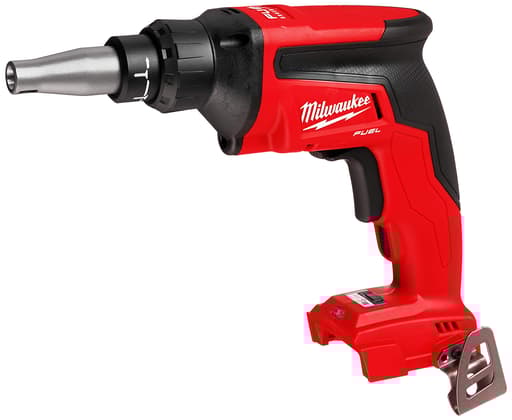
Features
- Automatic start mode to reduce noise and extend run time
- Compatible with M18 batteries
- Lightweight and ergonomic design for comfortable use
- LED light for improved visibility in dark areas
Related Tools
Related Articles
Cordless drywall screw gun for driving drywall screws. It includes an automatic start mode to reduce noise and conserve battery, is compatible with M18 batteries, has a lightweight ergonomic design for user comfort, and includes an LED light for improved visibility in low-light conditions.
Milwaukee Drywall screw gun Review
First impressions in the field
I put Milwaukee’s cordless screw gun to work on a mixed 1/2- and 5/8-inch drywall job—ceilings and walls—where speed and consistency matter more than outright torque. Within a few hours, it was clear this is a purpose-built tool that rewards a steady hand and repetitive tasks. The standout is the auto-start mode. Lock the trigger, set the nose, and the motor only spins when the bit touches the surface. That alone makes a long day of hanging quieter, less fatiguing, and more efficient. No whine between screws, no wasted battery while you reposition, and fewer interruptions to your rhythm.
Ergonomics and build
At 2.5 pounds bare, the screw gun feels light but not flimsy. The grip is well-shaped with a high trigger position that lets your index finger ride comfortably, and the top contour fills the web of the hand nicely when you’re pushing overhead. Balance changes depending on battery choice. With a compact M18 pack, the tool stays nimble and easy on the wrist. With a 5.0Ah, it’s still balanced, just a touch tail-heavy. I preferred a 3.0 High Output for a sweet spot between runtime and feel.
The LED work light is practical rather than flashy. It’s aimed well enough to illuminate a stud edge or line and helps in dim corners, though it can be partially shadowed by the nose in really tight spots. The belt clip is where it should be, and I used it frequently on ladder moves.
Construction-wise, the housing and nose assembly feel durable. Mine handled a few bumps and a ride in a dusty sack without issue. Depth adjustment is tool-free via a ring on the nose, and bit swaps are quick once you pop the cone off. Nothing about the exterior feels overly delicate, which is what I want in a tool that’s destined to live among gypsum dust.
Speed and consistency
This gun is fast. It’s rated for high RPM, and in use that translates to screws seated in a beat or two with very little ramp-up. Auto-start contributes here—you don’t need to finesse the trigger. Set the trigger lock, line up, press, done. The tool’s speed is helpful when you’re running long rows and trying to keep a constant drive depth without tearing paper. I found I could move as quickly as with a corded unit while being more deliberate with pressure.
Depth control is straightforward. I dialed it in on a scrap, then checked every few sheets and made minor nips as the bit wore. Once set, the screw heads landed flush with the paper or just slightly dimpled, which is where I like them for mud. Overdrives were rare and usually me rushing the press.
Auto-start mode: quieter, calmer, longer-lasting
Auto-start is not a gimmick. On a ceiling run, the difference in noise floor alone made the room more tolerable and communication easier. More importantly, it keeps the motor off when you’re moving between screws or adjusting a panel—time that adds up over a day. It also acts like a rhythm coach. With the trigger locked, you focus on tip placement and pressure; the motor follows you, not the other way around.
A tip: don’t “peck” at screws with light touches. A firm, straight push gives the most consistent results and lets the auto-start engage confidently. If you’re used to feathering a trigger on a corded gun, it takes a board or two to retrain the habit.
Battery life and platform value
If you’re already invested in M18, this tool slides right into the ecosystem. Battery life is strong. With a 5.0Ah pack, I comfortably worked through a big portion of a house—dozens of sheets—on a charge, rotating packs out of a dual charger over breaks. The 3.0 High Output still got meaningful work done while keeping the weight down; great for ceiling work where fatigue is real. The auto-start mode clearly stretches runtime compared to a constant-on screw gun. Between that and no cord to drag, my setup and takedown time shrank.
Note: it’s a bare tool. There’s no battery or charger in the box. That’s normal for pro-grade offerings, but it’s something to plan for if you’re not already on M18.
Tight spaces and the nosecone
The nose is the right length for control on broad surfaces, but it becomes a limitation in tight inside corners and around obstructions. There were a few spots where I had to switch to a right-angle adapter or drive a screw with a standard impact and long bit. It’s not unique to this gun—most drywall drivers share this—but be aware you’ll still need a plan for those perimeters and closet corners.
On one unit I used, the gray end of the nosecone had a touch of rotational play relative to the depth ring. That can lead to subtle shifts in drive depth over a run. Reseating the cone, making sure it’s fully clicked, and keeping drywall dust cleared out helped. On another sample, the nose locked up solid with no drift. If you notice inconsistent seating and you’ve ruled out a worn bit or shaky pressure, check the nose for free spin. If it’s excessive, I’d replace the cone; they’re consumable parts and not expensive.
Real-world handling
- Bit life matters. Fresh, good-quality Phillips bits seat cleaner and reduce cam-out that chews paper. Keep a couple spares taped to your belt.
- Set depth on scrap from the actual batch of board on site. Paper thickness and density vary by brand and fire rating.
- Use the lock-on with auto-start for production runs; use standard trigger mode if you’re moving slowly or working awkward angles.
- Blow out the nose regularly. Gypsum dust compacts quickly and can make the cone feel gritty or sticky.
Corded vs. cordless
I’ve used plenty of corded drywall guns over the years. This cordless one matches their speed and improves on consistency thanks to the auto-start and trigger lock combo. The absence of a cord is a meaningful safety and productivity upgrade—fewer trip hazards, no daisy chains, and faster repositioning. If you do most of your work in finished spaces or renovations where power access and floor clutter are constant headaches, the convenience leap is hard to ignore.
What could be better
- Nosecone tolerance: While mine was mostly solid, variability here can affect depth consistency. A tighter interface or a revised cone would make this near-bulletproof.
- LED placement: It works, but the beam can be partially blocked by the cone in close quarters. A secondary side LED or a slightly different angle would help when chasing lines in dark alcoves.
- Corner access: The overall head length is typical for the category, which still leaves you reaching for alternate drivers in very tight spots. A purpose-made compact nose option would be welcome.
Who it’s for
- Pros and crews who hang regularly and want less fatigue, less noise, and consistent results without the leash of a cord.
- Remodelers and maintenance teams who already own M18 batteries and value quick setup, cleanup, and transport.
- Serious DIYers tackling whole-room or whole-house hangs who want pro results and have multiple batteries on hand.
If you only drive the occasional patch panel and don’t own M18 batteries, a lower-cost corded gun still makes sense. But anyone doing more than sporadic work will feel the difference this tool makes by lunchtime.
Recommendation
I recommend this screw gun. It’s fast, light, and genuinely easier to live with over a long day thanks to the auto-start mode. Depth control is consistent once set, runtime is excellent on common M18 packs, and the ergonomics reduce the small strains that add up when you’re overhead or running long walls. The bare-tool packaging means you’ll need batteries and a charger, and the nosecone could benefit from tighter tolerances, but those are manageable considerations. For pros and committed DIYers—especially anyone already on M18—it’s a smart, productivity-boosting addition to the kit.
Project Ideas
Business
Same-Day Landlord Drywall Repair Service
Offer a rapid-response service for landlords and property managers to patch holes, refinish small areas, and touch up paint between tenants. Market quick turnarounds and low-noise repairs (automatic start) as tenant-friendly. Use the LED for closet and bathroom jobs and sell maintenance contracts for recurring revenue.
Accent-Wall & Finish Carpentry Installations
Specialize in installing decorative drywall features, shiplap, and built-in shelving as turnkey packages for homeowners and realtors staging homes. Promote speed and cleanliness—lightweight gun reduces installer fatigue for clean edges—and upsell finishing (mud/paint) and lighting integration.
Off-Hours Renovation Service for Retail/Hotels
Target businesses that need renovation work done outside operating hours. Emphasize low-noise automatic-start operation and LED illumination for safe night work. Offer zone-based pricing (overnight, weekend) and recurring maintenance windows to secure steady contracts.
Mobile Tool & Install Squad (M18 Ecosystem Bundle)
Build a branded mobile service van stocked with M18-compatible tools and spare batteries to do on-site drywall installs and small remodels. Market the speed and reliability of a battery-backed kit. Upsell battery rental, expedited jobs, and maintenance plans for landlords and small contractors.
Workshops and DIY Certification Classes
Run paid classes teaching homeowners how to patch drywall, install floating shelves, and finish accent walls using professional techniques. Use your screw gun in demos to highlight automatic start (safer, quieter) and battery advantages. Monetize with ticket sales, printed guides, and a referral program for tool or material sales.
Creative
Textured Drywall Accent Wall
Create a statement wall with staggered drywall panels or staggered narrow boards mounted over furring strips to add depth and shadow lines. Use the screw gun to quickly and cleanly set screws into the furring and drywall, then tape, mud, and texture or paint. The automatic start mode keeps noise low for working in occupied homes; the LED helps with alignment in corners or dim rooms.
Built-in Headboard & Nook
Build a recessed or framed headboard that integrates small niches and LED strips. Use the screw gun to fasten the drywall backing, mounting rails, and plywood supports; its ergonomic design reduces fatigue when working at bedside heights. Finish with paint and trim for a custom bedroom focal point.
Floating Shelves & Wall-Mounted Storage
Construct floating shelf systems anchored to studs and backed with a drywall or plywood panel for a seamless look. The screw gun speeds screwing into studs and makes repetitive installs fast and consistent. Good for small custom shelving, media walls, or pantry upgrades.
Modular Room Divider/Petite Partition
Build lightweight room dividers from studs and drywall to create flexible spaces in a studio or workshop. The cordless screw gun lets you erect panels quickly in tight spaces without dragging cords; M18 battery compatibility keeps you running with other tools on the same battery platform.
Garage/Workshop Wall System
Install full-height drywall or OSB panels on garage walls to create a durable backdrop for pegboards, cabinets, and tool mounts. The screw gun’s LED makes it easy to work under shelves and in corners; the light weight and ergonomic body speed up long runs of repetitive fastening.