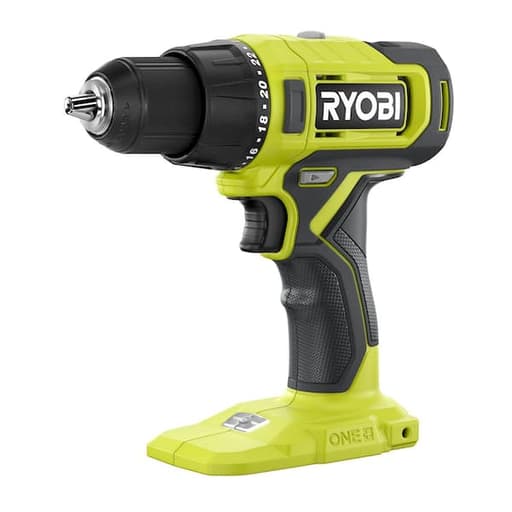
Features
- Cordless operation
- Lithium-ion battery
- Rechargeable 1.5 Ah battery
Specifications
| Voltage | 18 V |
| Battery Type | Lithium-ion |
| Battery Capacity | 1.5 Ah |
Related Tools
Related Articles

Cordless 18 V lithium-ion power drill with a 1.5 Ah rechargeable battery. Provides portable, battery-powered drilling and fastening capability for general-purpose tasks.
Ryobi Cordless power drill Review
Why I picked it up
I reached for this Ryobi drill to see where it lands in the sea of 18V cordless options—particularly for light renovation, household repair, and odd jobs where convenience and common-sense performance matter more than headline specs. I worked it through a week of mixed tasks: assembling cabinets, drilling pilot holes in studs and softwood, driving a mix of wood screws and concrete anchors (pre-drilled), and even converting it into a scrubber for a tile shower with a brush accessory set. The short version: it’s a practical, entry-level drill that’s easy to live with, solid for everyday chores, and best appreciated as part of Ryobi’s 18V ecosystem.
Design and ergonomics
The tool is compact and light enough to use for extended sessions without wrist fatigue. The handle shape and rubber overmold feel natural, and I had no hot spots even after long runs driving cabinet screws overhead. Balance with a small 18V pack is neutral; with a larger pack it leans a bit heel-heavy, which is typical and sometimes helpful for stability when you set it down on its battery base.
The housing is mostly plastic, and it looks and feels like a budget-friendly drill—no surprises there. The plastic molding seams are tidy, the trigger has a predictable pull, and the forward/reverse switch clicks with authority. It’s not a premium, metal-heavy build, but nothing rattled or flexed in a way that worried me during use.
Battery platform and runtime
The real draw here is the 18V lithium platform. I used the same batteries I run in a Ryobi trim nailer and inflator, which simplifies charging and keeps costs down if you’re already on the system. Runtime was more than adequate for homeowner tasks—installing a set of shelves and driving dozens of 2–3 inch screws didn’t demand a pack swap. For the shower scrubber test (high speed, constant load with a brush), one compact pack handled the whole cleaning session without protest.
One note on specs: I’ve seen a “1.5 A” value associated with this drill without context. That’s not how tool runtime is usually communicated (batteries are typically labeled in amp-hours, Ah), and it doesn’t describe torque or speed either. Treat that number as ambiguous and look to the battery’s Ah rating for runtime expectations.
Performance on typical tasks
Driving screws: With a clutch set conservatively, it drove drywall and decking screws cleanly without stripping heads. The variable-speed trigger is easy to modulate, which helped prevent overdriving in soft materials. For cabinet hardware and light carpentry, it’s right where you want it.
Drilling wood: In softwood and plywood, twist bits and small spade bits cut well. When I stepped up to larger spades, I had to feather the trigger and let the bit clear to avoid bogging. That’s expected for a compact drill of this class. For frequent large-bore holes or self-feed bits, I’d reach for a heavier-duty model.
Drilling metal: With sharp HSS bits and a dab of lubricant, it chewed through sheet steel and light angle stock at controlled speed. As usual, keep the rpm low and let the bit do the work.
Masonry anchors: This is not a hammer drill. Pre-drilling with a rotary tool and then using the Ryobi drill to drive anchors worked fine, but it’s not the right choice for drilling into concrete or block from scratch.
Turning it into a scrubber
Paired with a drill-compatible scrubbing kit, the Ryobi drill shines as a powered cleaner. The lightweight body and consistent speed made short work of grout lines and a textured shower floor. It’s a surprisingly effective secondary use: stand up, keep a steady wrist, and let the brush spin do the heavy lifting. A caution worth repeating—hard bristles can scratch delicate surfaces, so choose your brush accordingly and test a small area first.
Chuck and bit changes
The keyless chuck grips securely and releases smoothly. Swapping between drill bits and driver bits is quick, and the knurling offers enough purchase even with damp hands. I didn’t notice any measurable wobble with typical 1/8–3/8 inch bits. As always, seat the bit fully and snug the chuck with a final twist to prevent slip on higher-torque starts.
Light and controls
There’s an onboard LED that turns on with the trigger. It does the job in dim corners of cabinets and closets, but it shuts off the instant you release the trigger. I would prefer a short afterglow for alignment checks. The trigger response is predictable, and the direction selector is glove-friendly. If you live in tight spaces, the light is helpful, but don’t expect it to replace a task lamp.
Heat, noise, and general feel
Noise levels are typical for a compact 18V drill—sharp but not shrill. After continuous high-load tasks (think long scrubbing sessions or repeated large-hole drilling), the motor area got warm and gave off a slight “new tool” odor that faded over time. I didn’t experience cut-outs or performance throttling, but like any compact drill, giving it a short rest between heavy jobs is wise.
Durability and build quality
I dropped it from bench height onto plywood once (unintentionally) and saw no damage beyond a scuff. The housing seams remained tight, and the chuck stayed true. I wouldn’t call it jobsite-tough in the sense of metal gear housings and weather sealing, but for a garage, basement, or around-the-house environment, it feels suitably durable.
What it’s not for
- Constant heavy framing or big-bore drilling in hardwoods
- Mixing thick compounds or driving structural fasteners all day
- Drilling concrete or block without a hammer mechanism
If your projects routinely fall into those categories, step up to a more powerful drill or a dedicated hammer drill.
Value and platform perspective
This Ryobi drill makes the most sense if you’re invested in or planning to build around Ryobi’s 18V ecosystem. Battery cross-compatibility saves money and shelf space. As a core homeowner tool—assembling furniture, hanging fixtures, building simple shelves, light DIY—it’s hard to argue with the convenience-to-cost ratio. The ergonomics are friendly, the runtime is respectable with modern lithium packs, and the feature set avoids gimmicks.
Practical tips for better results
- Use quality bits and keep them sharp; it reduces heat and extends runtime.
- Let the clutch work for you when driving into soft materials to prevent stripping.
- For large spade or hole-saw cuts, start slow, back out to clear chips, and don’t force it.
- If using scrub brushes, match bristle stiffness to the surface and test first.
- Pay attention to battery Ah; a 2.0–4.0 Ah pack will noticeably extend runtime over compact packs.
Final take
The Ryobi drill is a straightforward, capable choice for everyday home projects. It’s comfortable, easy to control, and plays nicely with the 18V battery platform many DIYers already own. The build is more practical than premium, the LED could be smarter, and it’s not built for heavy-duty drilling—but none of that gets in the way of what it does well: reliable, hassle-free drilling and driving for basic tasks, plus the bonus of powering cleaning accessories.
Recommendation: I recommend this drill for homeowners, renters, and casual DIYers who want an affordable, comfortable tool that handles routine work without fuss—especially if you’re already using Ryobi 18V batteries. If you need pro-level torque, long-duration heavy drilling, or hammer capability, look higher up the range; otherwise, this is a sensible, friendly workhorse for the everyday jobs most people actually do.
Project Ideas
Business
Flat‑pack Furniture Assembly Service
Offer on‑demand assembly of IKEA and other flat-pack furniture in your area. The cordless drill makes quick work of dozens of screw connections, letting you finish multiple jobs per day. Market via neighborhood apps and charge per item or by the hour (typical rates $40–$80/hr depending on complexity).
On‑site Small Repairs & Installations
Provide a handyman-style service focused on drilling tasks: mounting shelves, curtain rods, TV brackets, baby gates and simple home improvements. Low startup cost and fast turnaround make this attractive to busy homeowners and landlords; offer flat fees for common installs and hourly for custom work.
Beginner Drill Workshops
Host small group classes teaching safe drill use and a simple build (e.g., floating shelf or planter). Charge per student, provide materials, and keep class size small for hands-on guidance. Workshops build a local audience, generate recurring income, and create upsell opportunities for custom projects or tool rental.
Upcycled Furniture & Decor Shop
Use the drill to produce a line of upcycled pieces (palet furniture, driftwood lamps, candle holders) and sell on Etsy, at craft fairs, or through social media. Emphasize handcrafted/eco credentials, photograph items well, and price to cover materials, labor and local shipping. Small-batch production allows quick testing of best sellers.
Creative
Driftwood LED Lamp
Collect a piece of driftwood or reclaimed branch, use the drill to bore a channel and recessed pocket for an LED puck or strip and to run wiring invisibly. Countersink screw pockets for mounting the base and attach a small plywood platform; finish with oil or clear coat. Great for a rustic bedside lamp or ambient accent.
Live-Edge Floating Shelf
Use the drill with pocket-hole jig or long screws to attach hidden cleats to a live-edge slab so it appears to float. Drill pilot holes and countersink mounts for a secure, low-profile installation. This project showcases natural wood and is an easy way to make a high-value home decor piece.
Log Tealight & Candle Holder Set
Turn small rounds or branches into a coordinated set by drilling evenly spaced candle sockets with spade or Forstner bits. Mix diameters for tealights, votives and taper holders; sand and apply beeswax or varnish. Quick to make in batches — great as gifts or market items.
Pallet Wine Rack
Upcycle pallet slats into a rustic wall-mounted wine rack by drilling holes and countersinking screws to join slats and create bottle slots. Use the cordless drill for pilot holes and driving screws quickly. Finish with stain or paint; design variations let you make stacked or wall-hung models.