Features
- Tool-less blade clamp for quick blade changes
- Anti-vibe handle to minimize vibration and user fatigue
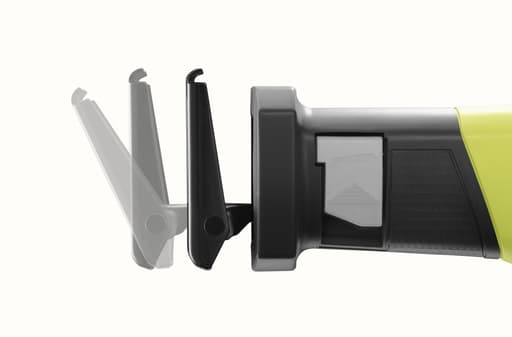
- Adjustable pivoting shoe for depth control
- Variable-speed trigger for cutting control
- GripZone overmold for improved grip
Related Tools
Related Articles

Handheld reciprocating saw intended for demolition and general cutting tasks. Designed for quick blade changes and user comfort, it includes vibration reduction, an adjustable pivoting shoe for depth control, variable-speed control for different cutting conditions, and an overmolded grip for improved handling.
Ryobi Reciprocating Saw Review
A compact cutter that’s easy to live with—most of the time
I’ve reached for this Ryobi recip saw on everything from trimming back yard limbs to freeing up rusty fasteners and breaking down treated lumber. It’s a compact, lightweight saw that leans hard on comfort and control rather than brute force, and that design choice shows—mostly in good ways.
Ergonomics and design
The first thing I noticed is the handle. Ryobi’s anti-vibe approach and the soft GripZone overmold make it pleasant to hold for extended cuts. The handle contour supports a neutral wrist, and I could maintain a steady grip with less squeeze than I typically need on budget recip saws. That matters when you’re cutting awkward angles or working overhead; the saw transmits less tingle into the hand and forearm, and I finished jobs with less fatigue than I expected.
Balance is respectable, especially with a mid-size battery. With a compact pack, the nose feels a touch heavy; with a larger pack, the rear weight evens things out. Either way, the center of gravity sits close to the grip, and that makes fine control on delicate cuts (think: cutting out drywall around a box, or nibbling a nail) less jittery.
The variable-speed trigger is responsive and easy to modulate. Starting a plunge cut into plywood or easing into metal without grabbing feels predictable, and I never felt like I had to “feather” the trigger endlessly to find the right speed.
Power and cutting performance
This is not a high-output demolition monster, and it doesn’t pretend to be. It’s an 18V homeowner/DIY saw that rewards sharp blades and steady technique. In wood, it’s happy tackling framing lumber, fence pickets, and subfloor. With a decent demolition blade, it’ll chew through a wall section with the usual mix of nails and screws. Push too hard and it will protest; let the blade do the work and it behaves.
In the yard, it’s useful for light pruning and cleanup. With a dedicated pruning blade, I cut small to medium limbs without drama. As limbs get denser and tougher, the saw slows. Trying to rush a cut on a thick hardwood branch leads to chatter and heat. It’ll get there, but it takes patience and blade selection matters more than usual. If pruning is a main use case for you, pair it with an aggressive pruning blade and expect to take your time on anything beyond yard-maintenance sizes.
Metal cuts are a similar story. With a fresh bi‑metal blade, it handled EMT, threaded rod, and the occasional bolt fine. On thicker stock, you need to control speed and keep the shoe planted to avoid vibration. It’s not the fastest, but it’s predictable.
Vibration and control
Vibration is where this saw overperforms for its class. Recip saws are inherently rowdy, but the anti‑vibe handle and overall mass distribution tame a noticeable amount of the harshness. The difference shows up most on longer cuts in wood; I finished a string of cuts through 2x material with less hand buzz than I’m used to from compact saws. That control translates into cleaner lines and fewer accidental blade bounces.
The adjustable, pivoting shoe helps here too. Keeping it planted against the work lets the blade settle into a smoother stroke, and the pivot makes it easier to maintain full-tooth contact as you change angles. Depth control via the shoe isn’t tool-free adjust on this model, but the pivot alone adds real stability.
Blade changes: a mixed bag
The saw uses a tool‑less blade clamp, and on paper that’s a win. In practice, it’s the one part of the experience I don’t love. The release collar is low-profile and springy. With bare hands, I could operate it reliably, but it requires a firm twist and a steady hold while you seat or remove the blade. In cold weather or with gloves on, I had to slow down and pay attention, and there were a couple of moments where I missed the tactile feedback and didn’t get the blade fully locked on the first try.
Two notes from living with it:
- Keep the clamp clean. Debris and dust make the action stiffer and less predictable. A quick blast of compressed air and a drop of light oil on the collar mechanism made a real difference.
- If hand strength or dexterity is an issue for you, try the mechanism in person before committing. It’s workable, but it’s not the most forgiving design.
Battery life and platform considerations
On moderate demo and yard tasks, runtime with a mid‑capacity battery has been completely reasonable. Cutting speed drops as the pack wanes—typical for an 18V brushed tool—so I prefer a higher‑capacity pack when I know I’ve got more than a handful of cuts ahead. The upside is portability: I can grab the saw and a couple of charged batteries and be productive anywhere without stringing cords.
If you’re already in Ryobi’s 18V lineup, the convenience is obvious. If you’re not, consider budgeting for at least one higher‑capacity battery; the tool benefits from the added stamina and the improved balance.
Durability and maintenance
The core drivetrain has held up well for me. The motor and internals feel as solid now as they did when new, and there’s no odd play or rattle in the shoe pivot. The point of concern is the blade clamp. It’s the most mechanically delicate part, and it’s the first thing I’d expect to need attention after heavy use. Treat it kindly:
- Blow out the nose regularly, especially after dusty cuts.
- Avoid twisting the blade side‑to‑side while it’s clamped; that torques the mechanism.
- Let stubborn cuts cool; heat bakes pitch into the clamp and blade tang.
With those habits, I’ve kept it functioning as intended. Still, if you expect to swap blades dozens of times a day on a jobsite, a more robust clamp on a pro‑grade saw will serve you better.
What it does best
- Light to medium demolition: cutting out sections of stud, subfloor patches, and the odd nail‑ridden board.
- Plumbing and electrical rough‑ins: controlled starts and a compact body make it easy to work between studs without overcutting.
- Yard cleanup: with a pruning blade, it’s a handy limb‑trimmer for routine maintenance.
Where it falls short
- Heavy pruning or dense hardwood: it will do it, but slowly, and it asks for sharp, task‑specific blades.
- All‑day demo: lack of raw speed and the blade clamp design make it less ideal for production work.
- Users with limited hand strength: the blade release requires a confident twist; not the friendliest for arthritic hands.
Tips to get the most from it
- Match the blade to the job. A quality pruning blade completely changes its yard performance. For nails‑in‑wood, use a coarse demolition blade; for metal, a bi‑metal blade with the right TPI.
- Plant the shoe and let the saw work. Forcing the cut adds vibration and heat without speeding things up.
- Step up to a larger battery for extended work. The saw feels more settled and maintains cut speed longer.
The bottom line
This Ryobi recip saw earns its keep through comfort, control, and everyday versatility. It’s not the fastest cutter in the shed, but it’s predictable, easy to handle, and kinder to your hands than many compact options. The blade clamp is the notable weak link—serviceable, but not my favorite—and raw power is capped by its class.
Recommendation: I recommend this saw for homeowners and DIYers who value comfort and control over maximum speed, especially if you’re already invested in Ryobi’s 18V platform. It’s a capable, easy‑to‑use tool for light to medium tasks around the house and yard. If you’re tackling heavy pruning, frequent blade swaps, or production‑grade demolition, I’d steer you toward a higher‑power, more robust model with a friendlier blade clamp.
Project Ideas
Business
Selective Demo & Prep Service
Offer targeted demolition services (kitchen tear-outs, bathroom guttings, interior wall removals) to contractors and homeowners. Market speed and precision: tool-less blade changes for mixed-material jobs, variable speed for controlled cuts near finished surfaces, and anti-vibe comfort for longer jobs. Package services with debris removal and site prep for remodelers who want quick, clean demo without heavy equipment.
Mobile Salvage Pickup & Resale
Run a pickup/resale business that removes salvageable lumber, fixtures, and hardware from renovation sites. Use the reciprocating saw to cut bulky items to transportable sizes on-site; pivoting shoe helps prevent over-cuts when removing trim. Resell reclaimed materials online, at a storefront, or to furniture makers. Add turnkey removal + listing service to increase margins.
Hands-On DIY Clinics & Corporate Training
Host paid workshops teaching homeowners and small contractors how to safely use reciprocating saws for common projects (plumbing rough-ins, demo, framing adjustments). Highlight tool features like variable speed for control, tool-less blade changes, and anti-vibe benefits. Offer attendee tool kits (blades, PPE) and upsell a discount on tool purchases or rentals.
Tool Rental + Consumables Subscription
Start a local rental service for specialty tools with a subscription for blades and accessories. Rent reciprocating saws for day/week jobs and offer monthly blade packs (wood, metal, demolition) and maintenance. Emphasize convenience: fast blade swaps, vibration-dampened handles for comfort, and included short training videos. Target independent contractors, weekend DIYers, and property managers.
Creative
Upcycled Pallet Furniture
Use the reciprocating saw to quickly break down pallets and other scrap wood to create benches, tables, or shelving. The tool-less blade clamp lets you swap from a wood blade to a demolition blade for nail-filled sections, the adjustable pivoting shoe helps control cut depth on uneven boards, and the anti-vibe handle reduces fatigue during repetitive ripping. Finish pieces with sanding and a clear coat for a rustic, high-margin product.
Sculptural Metal & Wood Mashups
Design small- to medium-sized garden sculptures or mixed-media wall art by cutting angle iron, pipe, and timber. Use metal-cutting blades for steel sections and wood blades for timber; quick blade changes keep workflow fast. Variable-speed control gives cleaner starts on metal and prevents tearout on wood, while the GripZone overmold improves control for detailed cuts. Market pieces to galleries, landscapers, or direct-to-consumer online.
Live-Edge & Reclaimed Slab Prep
Turn downed trees and reclaimed beams into usable table tops and shelves by cutting slabs and trimming bark lines. The pivoting shoe is useful for controlling depth on curved logs; variable speed helps manage blade chatter, and anti-vibe reduces fatigue when making long rip cuts. Produce one-off live-edge tops, charred (shou sugi ban) pieces, or custom shelving sold at craft fairs or online.
Salvaged Window/Door Frame Restorations
Carefully deconstruct vintage windows, doors, and trim for restoration or repurpose. Use the reciprocating saw to cut through caulk, nails, and hidden fasteners without damaging surrounding millwork—switch blades quickly as you hit metal fasteners. The pivoting shoe and variable speed allow precise, controlled cuts that preserve salvageable material for upcycled home decor or bespoke furniture.