
Features
- Cordless operation
- Self-priming design
- Compatible with all M18 REDLITHIUM battery packs
- 3/4 inch brass inlet and outlet connections
Specifications
| Power Source | Cordless (M18 REDLITHIUM battery compatible) |
| Battery Compatibility | Compatible with all M18 REDLITHIUM battery packs |
| Inlet/Outlet Connections | 3/4 inch brass |
| Self Priming | Yes |
| Includes Battery/Charger | No (tool only) |
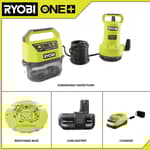
Cordless transfer pump for moving liquids. Designed with a self-priming mechanism and 3/4 inch brass inlet and outlet connections. Uses the M18 battery platform (battery/charger sold separately).
Milwaukee Transfer Pump Review
I threw this pump in the back of the truck for a storm-week run of odd jobs—moving water out of a flooded crawlspace, emptying a big planter cistern, and flushing a water heater—and it earned a permanent spot in the kit by the end of day one. The cordless freedom, simple setup, and surprising suction make it a handy problem-solver, provided you respect its limits.
Design and setup
This is a straightforward transfer pump: compact body, carry handle, and 3/4-inch brass inlet and outlet that accept standard garden-hose fittings and adapters. It runs on the M18 battery platform, which matters because runtime depends entirely on the pack you throw on it. There’s a single on/off button—no speed control—and a self-priming design that’s meant to save time.
Out of the box, setup is quick:
- Wrap your hose threads with PTFE tape, especially on the suction side.
- Use a reinforced suction hose or PVC; the pump’s pull can collapse cheap hoses.
- Keep the pump above waterline and on a dry, flat surface; this is not a submersible tool.
- If you’re working with a long run or stubborn suction line, backfill the hose with water to jumpstart priming.
Self-priming worked reliably for me so long as I eliminated air leaks. The moment you have a leaky fitting on the inlet, the pump will hunt and lose prime. With tight connections, it grabbed prime in about 10–20 seconds.
Ergonomically, the carry handle and compact footprint are great for moving room to room. The power button, however, has a soft, slightly gummy feel with gloves on. It never failed to actuate in my testing, but I wouldn’t complain if it had a more positive click.
Performance in the field
- Crawlspace dewatering: With about 20 feet of discharge hose and a short suction lift, the pump moved standing water quickly enough to keep me working, not waiting. I drained a 10‑gallon tub in just over three minutes, which is a good snapshot of real-world flow with modest head.
- Water heater draining: Hooked to the drain valve with a short hose to a nearby sink, it pulled steadily without any vapor lock. This is where the self-priming really shines; no fiddling with funnels or manual priming.
- Planter cistern and barrels: On longer suction lines, a foot valve or strainer helps the pump hold prime between stops. Without one, it still reprimes easily if your lines are sealed.
Think of this as a transfer tool, not a pressure booster. It will move a lot of water compared to siphons or gravity, but it won’t turn into a pressure washer. I’ve used it to push through moderate head height and long garden hoses; it does fine. Ask it to pressurize a closed loop to “shop air” levels and it will top out in the low double digits of PSI. For charging radiant systems or anything requiring sustained higher pressure, use a proper booster pump.
Runtime and batteries
Runtime varies with head height, hose length, water temperature, and battery pack. My typical results:
- 5.0Ah pack: roughly 25–35 minutes of continuous pumping
- 12.0Ah pack: comfortably over an hour in similar conditions
Heat builds up with continuous use, which is normal for a compact, sealed motor. I had no thermal shutdowns, but I do swap batteries before they’re stone-dead on longer jobs to avoid heat spikes and to keep the pace steady. For big dewatering sessions, bring at least two charged packs; three if you’re moving between areas all day.
For truly massive volumes—think big inground pools or emptying a large pond—this is not the right tool. A corded utility pump or a gas trash pump is simply more practical and cost-effective for marathon runs. The cordless pump’s strength is mobility and convenience on small to mid-size tasks.
Hoses and fittings matter
A lot of the perceived performance lives and dies with your hose choice:
- Suction side: Use a rigid or reinforced hose; soft garden hoses can pancake under suction.
- Keep suction runs short and as straight as possible. Every foot and fitting adds work.
- Add a foot-valve/strainer if you’re drawing from a tank or shallow sump to hold prime.
- Discharge side: Standard garden hose works. Upsizing with adapters reduces restriction if you need a bit more flow.
The 3/4-inch ports are a blessing and a limitation: great for compatibility, but they also cap flow. If your job regularly needs a 1-inch-plus pump, look to a larger platform.
Maintenance and durability
This pump is happiest with relatively clean water. After murky jobs, I let it run a short clean-water rinse to clear grit. A few other best practices that help longevity:
- Don’t deadhead the pump (running with the discharge closed) for long; it loads the motor and builds heat.
- Avoid extended dry running. Self-priming tolerates short dry cycles, but it’s not a dry pump.
- Store it dry and warm; drain hoses and the housing before throwing it back in the truck.
- Keep the tool out of splash zones. The motor is enclosed, but it’s not designed to be bathed. Treat it like a power tool, not a submersible pump.
I’ll also note that while the brass fittings are robust, treat the threads carefully. Cross-threading garden fittings is easy when you’re rushing and wet.
Noise and vibration
Noise is a steady electric whir—easier on the ears than a gas pump and perfectly fine for indoor work. Vibration is minimal; the pump doesn’t walk around on a slab. In tight spaces, the hum is noticeable but not obnoxious.
What I wish were different
- Variable speed or a low-power mode: There are times I’d trade peak flow for gentler suction to avoid collapsing borderline hoses or to meter flow more precisely.
- A more tactile power switch: Glove-friendly feedback would help on wet jobs.
- Optional larger-port kit: Even a 1-inch option would unlock more flow for those who can use it.
None of these are dealbreakers; they’re quality-of-life tweaks that would broaden usefulness.
Safety and use cases
This is a transfer pump for water and similar non-flammable, non-corrosive liquids. Don’t use it with fuels or solvents, and don’t use it for potable water. Ideal tasks include:
- Basement or crawlspace dewatering
- Draining water heaters, boilers (for transfer, not high-pressure charging)
- Emptying tanks, barrels, and boat bilges
- Jobsite sump evacuation where power isn’t available
- Seasonal tasks like winterizing outdoor lines (as a mover, not as an air source)
Value
If you already run M18 batteries, the value is strong. It solves the “no power, lots of water” problem without stringing cords or firing up a generator. If you’re buying into the platform solely for this tool, cost parity with a good corded utility pump is tougher, especially for big-volume users. But the cordless convenience and fast setup are hard to overstate for service work and punch lists.
Pros
- Cordless mobility; fast to deploy and move
- Reliable self-priming when fittings are sealed
- Strong suction for short to moderate lifts
- Brass 3/4-inch ports with common hose compatibility
- Manageable noise, compact and easy to carry
Cons
- No speed control; on/off only
- 3/4-inch ports limit peak flow compared to larger pumps
- Not suited for very large, continuous jobs
- Power button could have crisper feedback
- Demands good hoses; cheap suction lines will collapse
Recommendation
I recommend this pump for tradespeople and homeowners who need a portable, grab-and-go solution for small to mid-size water-moving tasks—especially if you’re already invested in M18 batteries. It primes quickly, moves water at a useful pace, and turns awkward, power-starved jobs into simple ones. I would not choose it for marathon dewatering (big pools, ponds) or any task that requires substantial system pressure; a corded utility or gas pump is a better fit there. Used within its wheelhouse—with proper hoses and a couple of charged packs—it’s a dependable, time-saving tool that earns its keep.
Project Ideas
Business
Mobile Car Detailing Service
Start a doorstep detailing business that uses battery‑powered transfer pumps to supply soap, rinse water, and spot‑treat solutions from onboard tanks. Cordless, self‑priming operation means you can serve locations without power and finish jobs faster. 3/4" fittings let you integrate pressure nozzles and hoses common in detailing.
Event & Wedding Water Feature Rentals
Rent portable fountain and water feature units for outdoor events. Build compact, battery‑operated fountain boxes with the transfer pump inside to run decorative displays where outlets or permits are limited. Quick setup and standard hose fittings make turnovers between events fast and repeatable.
Emergency Water Transfer and Pump‑Out Service
Offer a local service for small flood response, sump transfers, hot tub draining, or pool maintenance that can be deployed during power outages. The cordless, self‑priming pump is ideal for residential access and the 3/4" brass ports are compatible with common hoses. Market to homeowners, property managers, and small businesses.
On‑Site Agricultural Irrigation & Fertigation
Provide small‑farm fertigation and water delivery services: mix nutrients or pesticides in a tank and use the transfer pump to meter them into irrigation lines or refill mobile sprayers. Battery operation allows work across fields without generator support; the 3/4" brass inlet/outlet pairs with farm hoses and quick connectors.
Mobile Pressure‑Wash & Equipment Cleaning Service
Package the transfer pump with a portable pressure washer or foam system to clean farm equipment, construction gear, or fleet vehicles at client sites. Use the pump to draw from onsite water tanks or barrels, reducing the need to haul large water volumes. Fast setup and cordless flexibility increase job throughput and service area.
Creative
Battery‑Powered Garden Fountain Sculpture
Build a self‑contained decorative fountain or water sculpture for patios and events. Use the cordless transfer pump hidden in the base to recirculate water between a small reservoir and sculpted outlets. The 3/4" brass fittings make it easy to connect flexible tubing and interchangeable spray heads — ideal for movable art that doesn't need a power outlet.
Portable Car‑Detailing Bucket System
Create a mobile detailing setup that siphons soap and rinse water from a tote or jerry can. The self‑priming pump and M18 cordless power let you work at client driveways or parks without cords. Design a compact carrier with hose storage and quick‑connect 3/4" fittings so you can switch between soap mix and clean rinse.
Micro Hydroponics/Nutrient Circulation Kit
Assemble a small recirculating hydroponic system for an indoor grow bench or classroom. Use the pump to move nutrient solution through PVC or tubing runs and back to the reservoir. The cordless operation lets you test different layouts without wiring, and the 3/4" connections work with common greenhouse hose fittings.
Rainwater Distribution Cart
Craft a watering cart that moves collected rainwater to raised beds and planters. Fit a barrel on a wheeled frame with the transfer pump mounted to draw and dispense water into larger watering cans or drip tanks. The brass fittings simplify hose hookup and the cordless battery means you can refill far from an outlet.
Wood‑Soak Station for Steam Bending and Dyeing
Make a portable soaking/tank station for small woodworking projects — ideal for steam bending blanks or dyeing thin pieces. Use the pump to circulate and maintain even temperatures or to transfer soak baths between tanks. Operate away from power sources on shop sites using the M18 battery platform.