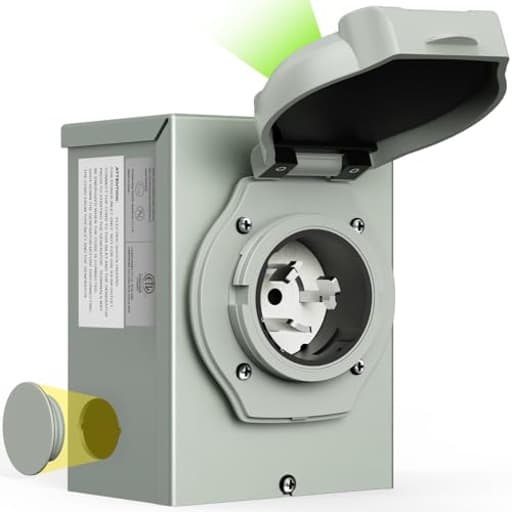
Features
- Generator Power Inlet Box: Power inlet box is an outdoor/watertight electrical inlet for a 50 Amp SS2-50 generator cord. 125/250V, 12500W. It is designed to be installed outdoors in an open area where the generator is being used and perfect for backup power during a power outage
- Safety Assurance: It is designed to be located outdoors where the generator is running to prevent dangerous carbon monoxide fumes from the generator from entering your house. This inlet box is then safely hardwired through an outside wall directly to the transfer switch or panel, eliminating the need for cords running through windows or doors. Our generator power inlet box passed the certifications of ETL
- Best Space Design & Easy to Install: Compared with ordinary boxes, we have increased the wiring space by 50%. There are generous wiring space and facilitates through-in. The front of the box is removable for easy placement and wiring
- Weatherproof & Anty-rust: The front entry inlet has a weatherproof spring cover which closes when not in use to protect the inlet from the elements. The surface of the power inlet box with anti-corrosive powder-coat paint which can resist weather damage like rain, UV, will not rust
- Green Light Indication: Upgraded version provide a Green Power Indicator. There will be on a green light on the flip lid when plugging into the generator cord and powering on the generator. It gives a visibly clear indication when it is working and inlet is ready to use, which provides optimum performance and added safety
Specifications
| Color | Green |
| Unit Count | 1 |
Related Tools
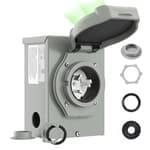
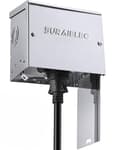
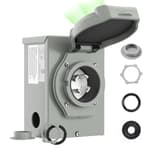
This 50 Amp, 125/250 V (12,500 W) outdoor power inlet box accepts a 3‑prong generator cord and is designed to be hardwired through an exterior wall to a transfer switch or electrical panel. It has a weatherproof spring‑cover inlet, anti‑corrosive powder‑coat finish, a removable front for increased wiring space, an ETL listing, and a green indicator light that illuminates when the inlet is powered.
Rophor 50 Amp Generator Power Inlet Box, NEMA SS2-50P for 3 Prong Generator Cord, 125/250 Volt, 12500 Watts, Weatherproof, Outdoor Use, ETL Listed Review
A 50‑amp inlet box that does the basics right
A 50‑amp inlet box should be boring—which is a compliment. It’s a pass‑through device that needs to be rugged, safe, and easy to wire. After installing and using the Rophor 50A inlet box on a whole‑home backup setup, I’m impressed by how it solves the common pain points without gimmicks. It’s a compact, front‑facing SS2‑50 inlet rated for 125/250 V and 12,500 W, finished in a durable powder coat, and listed by ETL. The small touches—more wiring space, a removable front panel, a weatherproof spring cover, and a clear green power indicator—add up to a box that’s straightforward to live with.
Build and design
The Rophor inlet box is made from heavy‑gauge steel with an anti‑corrosive powder‑coat finish. It feels dense and solid in the hand, and the hinge and lid spring are firm without being stiff. The inlet is front‑facing rather than bottom‑facing, so you don’t have to crouch and fumble with a heavy 50A cord. The spring‑loaded cover closes positively and seals well when not in use.
Inside, the layout is simple and generous. Rophor claims 50% more wiring space than “ordinary boxes,” and while I can’t quantify that across every competitor, I had no trouble routing two 6 AWG hots, a 6 AWG neutral, and a 10 AWG ground with proper bends and conductor separation. The terminals are appropriately sized and secure.
A small but useful detail: the lid has a green indicator light that illuminates when the inlet is energized. It’s bright enough to see in daylight at a glance, and it removes any guesswork about whether you’ve got generator power present before you touch the interlock or transfer switch.
Installation experience
I mounted the box outdoors on the generator side of the wall, hardwiring it through to a manual transfer switch. A few notes from the process:
- Access and space: The removable front panel is the star here. Pop it off and you get clean, direct access to the inlet and terminal screws, which makes landing stiff conductors much less frustrating. Once conductors were in place, I could seat the panel without pinching insulation.
- Conduit entries: My unit arrived with gasketed, pre‑drilled 3/4‑inch entries plugged and secured with locknuts. That’s convenient and avoids any “hunt for the knockout” exercise. The gaskets are a nice touch for weather protection.
- Conductor sizing: For a 50A inlet at 125/250 V, I pulled 4‑wire (hot–hot–neutral–ground), using 6 AWG for the current‑carrying conductors and a 10 AWG ground. This is a tight but workable fit in 3/4‑inch conduit for short, straight runs; if you need longer or more bends, stepping up to 1‑inch conduit will make life easier.
- Code/safety context: This is an inlet, not an outlet. Pair it with a proper transfer switch or interlock, and keep the generator outdoors in an open area. The ETL listing is reassuring, and the overall build quality matches what I’d expect for a device tied into a home’s service equipment.
One install quirk: the faceplate is held by a single small screw at the front. With heavy conductors pushing back, that lone fastener has to do a lot of work. It’s secure, but two additional side screws would make the closure feel more confidence‑inspiring when you’ve packed the box full.
Weather protection and durability
The outer finish shrugs off fingerprints and resisted scuffs during install. After a couple of rainy tests and one wind‑driven storm, I saw no signs of water ingress; the spring cover closes flush, and the sealing around the conduit entries did its job. The green indicator light is protected under the lid and didn’t fog up or retain moisture.
UV and corrosion are long‑term tests, but the powder coat and hardware look up to the task. I’ll keep an eye on the plastic inlet mounting plate over time—heat and sun can age plastics—but there were no signs of flex or creep during use, and the inlet itself locks the SS2‑50 cord collar securely.
In use with a generator
I ran a 50A‑capable portable generator to simulate outage conditions, feeding selected circuits in the house. The front‑facing connector paid dividends: aligning and twisting a heavy SS2‑50 cord is simply easier when you can see what you’re doing. The locking collar tightened cleanly with no cross‑threading.
The green indicator light is not just a gimmick. In the dark, it’s a quick “go/no‑go” before you head inside to throw the interlock. During daylight it’s still clear enough to catch out of the corner of your eye.
Electrically, the box is transparent—as it should be. No perceptible heat buildup at the terminals under load, and no hum or vibration from the enclosure. Everything remained tight and stable after a few test cycles of connecting/disconnecting the cord.
Limitations and nitpicks
No product is perfect, and a few items are worth noting:
- Conduit size options: The pre‑drilled entries on my unit were 3/4‑inch only. For many installs that’s fine, but if you want 1‑inch conduit for easier pulling of 6 AWG conductors on longer or bend‑heavy runs, you’ll be drilling or stepping up with adapters.
- Faceplate retention: The single front screw works, but compressing stiff conductors against the removable panel makes you wish for a second and third fastener on the sides.
- Inlet mounting plate: The bracket securing the inlet is plastic. It felt sturdy and didn’t flex, but metal would be more reassuring for long‑term exposure in high‑heat climates.
None of these are deal‑breakers; they’re the kinds of refinements that would turn a very good box into an excellent one.
Compatibility and use cases
This box is designed for a standard 50A SS2‑50 generator cord at 125/250 V, which is common on higher‑output portable generators and many RV/marine‑style cords. It’s intended to live outdoors, with your generator running in open air, and be hardwired through the exterior wall to a transfer switch or panel. Use it for:
- Whole‑home or large subpanel backup with 50A‑capable generators
- Shop or barn feeds where a front‑facing, weatherproof inlet makes cord management easier
- Any application where you want to eliminate window/door cord runs and maintain a clean, safe interconnect
If you’re working with a 30A generator (L14‑30), this is overkill. If your generator uses a straight‑blade 14‑50 connection rather than SS2‑50, make sure your cord or adapter is appropriate and rated.
Practical tips from the install
- Plan the box height so the cord hangs with a drip loop under the lid.
- If your run isn’t straight, consider 1‑inch conduit to make pulling 6 AWG less punishing.
- Use antioxidant where required and torque terminals to spec.
- Label the inlet clearly and test your transfer procedure in daylight before you need it at 2 a.m.
The bottom line
The Rophor 50A inlet box gets the fundamentals right: robust steel enclosure, weather‑tight lid, ample wiring room, and a clean, front‑facing SS2‑50 connection. The removable front panel and the power‑present indicator make installation and operation easier than average. I’d like to see multiple conduit size options, a beefier cover retention scheme, and a metal inlet bracket, but those are refinements rather than red flags.
Recommendation: I recommend this inlet box for homeowners and pros who need a dependable, ETL‑listed 50A outdoor inlet with good ergonomics and plenty of wiring space. It’s a solid value that prioritizes safety and usability, and once installed, it does exactly what you want an inlet to do—quietly disappear into the background until the lights go out.
Project Ideas
Business
Inlet Installation Service for Homeowners
Offer a turnkey service installing 50A weatherproof power inlets and transfer switches for emergency backup. Package options: inlet-only, inlet + transfer switch, inlet + whole-house ATS (automatic transfer switch). Include permit assistance, site assessment (CO/fuel location recommendations), and a visual handoff with the homeowner showing the green indicator and safe generator placement. Charge per job or offer tiered bundles.
Event Power Rental + Setup
Rent prewired portable pedestals equipped with the inlet box, distribution panel and cable management for weddings, fairs and outdoor productions. Provide onsite technicians to hook generators to the inlet, manage load balancing and ensure safe, code-compliant hookups. Revenue streams: rental fees, technician hourly rates, delivery/setup and damage waivers.
Prewired Kits for RV/Tiny-Home Builders
Manufacture and sell prewired inlet kits that include the ETL-listed inlet box, conduit-ready backbox, labeled wiring harness and straightforward installation instructions for builders and DIYers. Offer optional add-ons: surge protection, transfer switches, and siding-matched bezels. Sell online to tiny-home communities, RV parks and builders—position as a safety and convenience upgrade.
Contractor Partnership & Subcontracting
Form partnerships with electricians, HVAC companies and general contractors to supply and install inlet boxes as part of new builds and remodels. Offer volume pricing, training sessions on best practices (CO safety, placement rules, wiring tips using the enlarged wiring space), and co-branded marketing materials that highlight the ETL listing and weatherproof features.
Maintenance & Inspection Subscription
Sell an annual service plan to inspect and maintain outdoor power inlets: check seals and covers, test the green power indicator and continuity, clean corrosion, verify tight connections, and perform a load test. Include priority scheduling after storms and a discounted replacement policy. This creates recurring revenue and builds long-term customer relationships.
Creative
Backyard Emergency Power Station
Turn the inlet box into a dedicated, weatherproof emergency power station mounted on a decorative post or exterior wall. Hardwire it through the wall to a small transfer switch or subpanel and add labeled circuits for fridge, furnace, lighting and a few outlets. Use the green indicator light as a visible ‘power available’ status. Materials: inlet box, post or siding-matched mounting plate, transfer switch, breakers, conduit, weather seals. Benefit: clean, code-friendly solution that keeps cords out of windows and looks intentional.
Portable Event Power Post
Build a portable power post or rolling cart for markets, backyard parties, and pop-up events. Mount the inlet box on a treated-wood post or steel column, feed it into a built-in distribution panel with GFCI outlets and circuit breakers, and store the generator cord in a lockable compartment. The removable front makes wiring tidy and serviceable; the weatherproof cover protects connections between events.
Tiny House / RV Shore Power Hookup
Integrate the inlet box as the shore-power inlet for a tiny house or permanent RV pad. Use the extra wiring space to add an inline surge protector and meter socket or a simple transfer switch. Paint or powder-coat a matching trim ring so the inlet blends with siding. ETL listing and weatherproof design make it a safe, marketable upgrade for off-grid or mobile living builds.
Outdoor Tool Charging Locker
Create a secure outdoor battery charging locker for cordless lawn and garden tools. Hardwire the inlet box to a small interior charging cabinet that holds multiple chargers and batteries. The weatherproof inlet lets you run a generator during long jobs or outages; the green lamp provides quick visual confirmation that external power is present. Great for landscapers who want a single, tidy outdoor feed for their yard.
Illuminated Garden Feature with Functional Inlet
Combine function and form by mounting the inlet box into a decorative garden column that also contains low-voltage landscape lighting equipment. Use the inlet for seasonal power (tree lights, fountain fills) and route low-voltage lighting transformers inside the column. Keep mains wiring isolated and code-compliant; the green indicator doubles as a subtle garden accent when the generator is running.