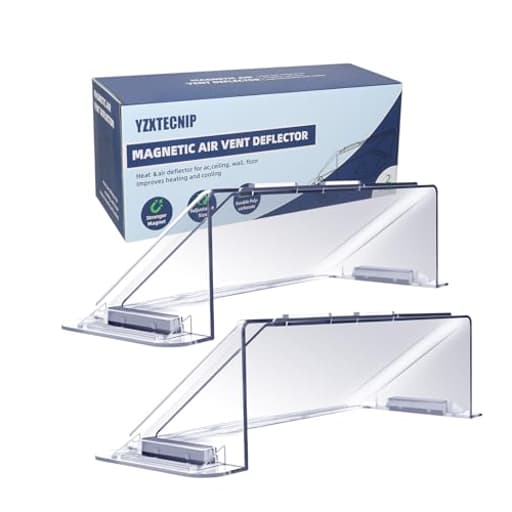
Features
- Efficient Airflow Control: Using ceiling, floor or wall vents to direct airflow away from walls, furniture and ceilings, it can change the airflow direction of air conditioning or heating to improve comfort!
- Magnetic Installation: It can be firmly attached to baseboards, central air conditioning vents or metal air outlets by strong rubidium magnets, no hardware or adhesive is needed, if the adsorption is not strong enough, please check whether the magnets are exposed and the surface of the vents is metal or not.
- Adjustable Installation: With adjustable extender, it can adapt to 9-14 in various sizes and shapes of air vents for easy customized installation.
- Durable Construction:Constructed of high-quality plastic, metal or polycarbonate plastics, precision engineered and manufactured to operate in hot and cold environments, flame- and oxidation-resistant to withstand the daily wear and tear of heating and cooling systems, and to ensure smooth, unobstructed movement throughout the entire regulation range.
- Wide Range of Uses: Our air deflector is equipped with powerful magnets to meet your HVAC ventilation needs in different locations such as floors, ceilings and side walls. It can also be used in all corners of homes, offices, workplaces and supermarkets.
- Note:The magnets(supplied) are not suitable for wood, aluminium and plastic vents.Screw slots on deflectors are reserved for non-metal vents.
Specifications
| Color | Transparent |
| Unit Count | 2 |
Related Tools
Transparent adjustable air deflector that mounts to floor, wall or ceiling vents to redirect HVAC airflow; the extender adjusts to fit 9–14 inches and the unit is constructed from polycarbonate plastic to withstand heating and cooling environments. It uses built-in magnets to attach to metal vents (magnets will not hold to wood, aluminum, or plastic), and screw slots are provided for non-metal vent installation; sold as a pack of two.
YZXTECNIP Strong Magnetic Air Vent Deflector for Vents, Sidewalls and Ceiling Registers,Adjustable Air & Heat Deflector,9"-14"Inches Wide-Heavy Duty Unbreakable Plastic with Powerful Magnets,2 Pack Review
Why I tried this vent deflector
A blast of conditioned air straight across a room is great for fast warm‑ups and cool‑downs—but it’s not great for comfort. In my home office, a wall register sent cold air directly at my chair, and a floor vent under the living room console pushed heat into the back of the cabinet instead of the room. I installed the YZXTECNIP vent deflector in both spots to see if a simple redirect could solve both problems without reworking ducting or swapping registers.
Design and build quality
This is a clear, polycarbonate deflector that telescopes to fit vents between 9 and 14 inches wide. The transparency matters more than I expected: against white baseboards and standard brushed metal grilles, it visually disappears better than opaque plastic. The plastic feels dense and stiff, more like a face shield than a flimsy register accessory. After a few weeks of hot supply air from a forced‑air furnace, I didn’t see any warping or discoloration.
The deflector ships as a two‑pack. That’s sensible—you almost always have more than one problem vent—and the two pieces are identical. Each unit has a pair of strong magnets embedded along the mounting edge and small slots for screws if you’re working with a non‑metal vent. The adjustment range covers most standard residential supply registers. If your vents are larger than 14 inches, this won’t span the full width.
There’s no fussing with hinges; the geometry is simple and effective. The curved hood sits proud of the grille to catch and redirect the airstream, and because the profile is open, it doesn’t feel like you’re throttling the system so much as steering it.
Installation in practice
On metal floor and wall vents, installation was as easy as it sounds: align, click, done. The magnets are strong enough that I could slide the unit left/right to center it without it popping off, and it survived my robot vacuum bumping the floor register multiple times without moving. On the sidewall register, I pressed along the full length of the magnetic strip to make sure it sat flush against the grille face. If your vent has a raised trim ring or a curved face, check for good contact; a slight gap won’t kill the hold, but it does reduce magnet strength.
A few setup tips from my installs:
- Confirm your vent is ferromagnetic with a fridge magnet first. Aluminum, plastic, and some stainless finishes won’t hold. If it doesn’t stick, use the built‑in screw slots.
- Wipe dust from the grille. A thin layer of grime noticeably reduces grip.
- Adjust the length before you climb a ladder for a ceiling install. The telescoping action is smooth but easier with two hands at eye level.
- On tall baseboards with a beveled top lip, mount the deflector slightly below the very top of the grille so the magnets sit on a flat plane.
For a ceiling register above the bed, the magnets were strong enough to stay put while I adjusted angle and position. After a few days, it hadn’t migrated or drooped.
Performance and comfort changes
With the deflector on the wall register in my office, the sensation of “cold air on my arms” vanished immediately. The hood redirected the airstream parallel to the wall, throwing it farther across the room where it mixed before reaching me. Noise from the register didn’t increase, and I didn’t perceive any whistling, which can happen if you put sharp restrictions directly over a grille.
The floor vent under the console was the bigger win. Before, most of the heat pooled behind the cabinet, warming cables and the back panel. With the deflector on, the heat projects out from the baseboard and curls into the room. I measured about a 2–3°F improvement at seating height during the first 15 minutes of a heat cycle compared to no deflector, which tracks with how the space felt—quicker to get comfortable. Anecdotally, my system also short‑cycled less during mild days because the thermostat wasn’t being blasted by direct supply air from a nearby vent.
On the ceiling register, the deflector kept cold air off the bed without starving the room. Because the unit is relatively wide open, you’re changing direction much more than reducing flow. Still, as with any airflow accessory, don’t use this to block a vent entirely; that can increase static pressure and noise upstream. And don’t put it on a return grille—this is meant for supply air.
Where it works best
- Floor vents behind or under furniture: Shift air out from behind sofas, consoles, and low cabinets instead of into them.
- Sidewall vents near thermostats: Prevent direct drafts on the sensor for more stable readings.
- Ceiling registers over beds or desks: Keep cold air from dumping straight down without sacrificing circulation.
- Open‑plan spaces: Nudging airflow toward the room core helps mixing and reduces hot/cold spots without rebalancing dampers.
Limitations and practical caveats
- Vent material matters. If your grilles are plastic or aluminum, the magnets won’t help; plan to use screws. Test with a magnet before you buy multiple sets.
- Size range is fixed. At 9–14 inches, it won’t fit narrow bath vents or wide linear grilles. Measure first.
- Curved or ornate grilles reduce magnet contact. It still can work, but stability is best on flat‑faced registers.
- Watch for condensation in humid cooling seasons if you push very cold air along a cold exterior wall; I didn’t see moisture, but in very humid climates, monitor the first days to be safe.
- If you already have tight ductwork with high static pressure, any deflector can add a hair of resistance. Listen for new whistling; if you hear any, slightly reposition the hood to soften the angle.
Durability and maintenance
Polycarbonate takes heat well and resists oxidation better than the flimsy acrylic used in bargain deflectors. Mine handled full‑heat cycles without softening. Cleaning is a quick wipe with a damp microfiber cloth. Being transparent, it will show dust sooner than an opaque piece, but a 30‑second wipe during regular dusting keeps it clear.
The magnets are encapsulated, so there’s no rust bleeding onto white paint. If you use screws for non‑metal installs, go easy to avoid over‑tightening through the slots—snug is enough.
How it compares to alternatives
I’ve tried three styles over the years: thin, flexible shields with weak magnets; rigid acrylic hoods with stick‑on tape; and magnetic “extenders” that slide under furniture. The flexible shields tend to bow and pop off when warm air hits them. Tape‑mounted hoods peel in humidity or when you clean the grille. Extenders are great for floor vents moving air under sofas but don’t solve ceiling or wall issues. This YZXTECNIP unit hits the sweet spot for simplicity, reusability, and stability across floor, wall, and ceiling registers.
Who will get the most benefit
- Renters who can’t swap grilles or rebalance dampers but want immediate comfort gains without permanent changes.
- Homeowners with poorly placed vents—especially those pointed at curtains, thermostats, beds, or workstations.
- Anyone trying to improve mixing in a room where furniture blocks floor registers.
You might skip it if your grilles are all non‑magnetic and you don’t want to use screws, or if most of your vents fall outside the 9–14 inch range.
Final take
The YZXTECNIP vent deflector does exactly what it’s supposed to do: it redirects airflow cleanly, installs in seconds on metal registers, and stays put. The build feels more durable than the bargain‑bin options, and the clear plastic helps it blend into most spaces. It won’t fix systemic duct balancing issues, but for managing drafts, keeping furniture from soaking up conditioned air, and smoothing out hot/cold spots, it’s a low‑effort, high‑impact tweak.
Recommendation: I recommend this deflector. The combination of strong magnets, a useful 9–14 inch adjustment range, and a rigid, heat‑tolerant body makes it a reliable, easy upgrade for common HVAC annoyances. If your vents are metal and within size, you’ll get a noticeable comfort improvement for minimal cost and effort, with the bonus of two units to tackle the worst offenders in your home.
Project Ideas
Business
Landlord/short-term rental comfort kits
Assemble and sell inexpensive 'comfort kits' for landlords and Airbnb hosts: two magnetic deflectors, a simple placement guide, small digital thermometer/hygrometer, and a one-page checklist for seasonal airflow adjustments. Market as a low-cost way to improve guest comfort and reduce complaints about hot/cold rooms. Offer bulk discounts and a short how-to video to increase perceived value.
Branded hospitality & office solutions
Offer custom-branded deflectors (logo printing or vinyl overlays) to hotels, office chains and restaurants to help them manage room airflow and comfort without HVAC work. Sell in bulk with installation options. Emphasize energy-savings case studies (reduce thermostat fights, concentrate cooling/heating) and offer training packs for facility teams.
Allergy & health-targeted product bundle
Create a targeted product bundle for allergy sufferers and parents: magnetic deflectors plus a high-quality vent-mounted filter, usage instructions (redirect air to pull through filters), and seasonal tips. Partner with local HVAC shops and allergists for referrals. Position it as an affordable improvement before investing in full HVAC upgrades.
Microclimate consulting + installation service
Offer a local service—home visits or virtual consultations—to optimize room airflow for plants, pets, home offices, or small server closets. Use the deflectors as part of a package (placement plans, multiple deflectors, seasonal adjustments). Charge a consultation fee plus per-deflector installation; upsell follow-up visits or subscription seasonal tune-ups.
Decor & lighting ecommerce line
Turn the deflector into a design product: apply vinyl decals, hand-painted edges, or integrated LED kits and sell finished pieces on Etsy or Shopify as 'vent lighting' or modern minimalist decor that doubles as an HVAC accessory. Price higher for customization, include installation tutorials, and offer add-on services like color-matching to interiors.
Creative
Seedling microclimate channel
Mount the deflector to a nearby floor or wall vent to direct warm air across a shelf of seedlings or cuttings. The adjustable 9–14" extender lets you shape airflow so trays get gentle, even warmth (preventing hot spots). Use the magnets for fast placement on metal vents or screws for other surfaces. The polycarbonate resists heat and humidity, so it’s safe near grow lights and humidifiers.
LED diffuser light strip
Turn the transparent deflector into a subtle ambient light fixture by attaching waterproof LED tape along one edge or underneath. The clear plastic diffuses the LEDs into a soft glow across the ceiling or wall while still redirecting air. Magnets let you reposition the light/diffuser quickly for photoshoots, parties, or mood lighting without drilling.
Herb-drying rack and dryer aid
Create a small herb-drying station by clipping lightweight herb bundles to the deflector or a thin dowel attached to it. Mount it beneath a warm vent to create gentle upward airflow that speeds and evens drying without burning herbs. The heat-resistant construction prevents warping, and the adjustable width fits many vent sizes.
Pet comfort canopy
Make a microclimate for a pet bed by installing the deflector to divert cold drafts or direct warm air away from walls and into the pet’s space. The transparent shield keeps sight lines open, magnets allow repositioning as seasons change, and screw slots enable permanent installation in kennels or built-in nooks.
Kinetic vent mobile
Build a lightweight mobile that hangs in front of or from the deflector so vent airflow animates small ornaments or art pieces. Use the magnetic mount to quickly swap designs for holidays or displays. Polycarbonate’s durability makes it safe for repeated motion and temperature changes.