
Features
- 1000 A peak current for starting 12V vehicle batteries
- Rated for engines up to 6.0 L gasoline and 3.0 L diesel
- Supports up to 20 starts per charge (actual number varies by engine size and conditions)
- Integrated USB power bank for charging phones and tablets
- Built-in LED flashlight with regular, SOS and strobe modes
- Safety protections including spark-proof operation and reverse-polarity protection
- Compact, lightweight form factor suitable for glove boxes and emergency kits
- Rugged housing with rubber over-molding for water and dust resistance
- Includes heavy-duty clamps and storage bag
Specifications
| Nominal Voltage | 12 V |
| Battery Chemistry | Lithium-ion |
| Peak Current | 1000 A (peak) |
| Engine Compatibility | Up to 6.0 L gasoline; up to 3.0 L diesel |
| Estimated Starts Per Charge | Up to 20 (varies by engine size and conditions) |
| Usb Output | Integrated USB power bank (output current/voltage not specified) |
| Led Flashlight | Built-in LED with regular, SOS, and strobe modes |
| Safety Features | Spark-proof operation; reverse-polarity protection |
| Accessories Included | Heavy-duty clamps; storage bag |
| Housing | Rugged housing with rubber over-molding for water and dust resistance |
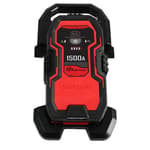
Portable 12V lithium-ion jump starter designed to start standard vehicle batteries. Provides a high peak current for starting engines and includes an integrated USB power outlet for charging small electronics. Built-in LED provides lighting and emergency signaling modes. Includes basic safety protections and comes with clamps and a storage bag. Actual performance (number of starts per charge, effectiveness on larger engines) will vary with engine size, battery condition, and environmental factors.
NOCO 12V lithium jump starter Review
A compact jump-starter that earns its glove-box space
The GB40 has lived in my glove box for more than a year, and in that time it’s bailed me and a few neighbors out more than once. It’s compact, clear about what it can (and can’t) do, and—most importantly—puts enough power into a dead battery to get you rolling without fuss. It isn’t perfect, and you should treat it like a consumable rather than a forever tool, but as a first-line emergency starter for most gas vehicles, it’s a strong pick.
Build and design
This is a tidy, brick-sized pack with a rubberized shell that shrugs off scuffs and the occasional splash. It feels sturdier than many no-name packs: the seams are tight, the ports have snug covers, and the clamps are properly chunky rather than toy-like. The included storage bag is basic but useful, and the cables are long enough to reach remote under-hood jump posts on cars with trunk-mounted batteries—something cheaper packs often struggle with.
At about the size of a paperback and light enough to toss into a door pocket, it’s easy to keep on hand. The LED status bar is simple and legible. There’s a built-in flashlight with steady, SOS, and strobe modes, which I’ve actually used to find a decent ground point on a rainy shoulder. The USB-A output turns the unit into a backup battery for phones and headlamps; it won’t replace a dedicated power bank, but it’s handy in a pinch.
Starting performance
Rated at 1000 A peak for 12 V systems and advertised for up to 6.0 L gas and 3.0 L diesel engines, the GB40 punches above its size. Real-world performance is about more than a headline peak number, though: engine displacement, battery health, temperature, and how long the vehicle’s been sitting all matter.
Here’s what I’ve seen:
- Four-cylinder gas sedans and small crossovers: effortless. Even with a battery that was so weak the interior lights barely flickered, the car started on the first crank.
- Mid-size V6 gas engines: no drama. One start after another on a cold morning, with the pack dropping only a single bar.
- Full-size V8 gas truck: started cleanly on a subzero day, though the truck battery wasn’t completely toast. In harsher cases, I’ve needed a second attempt after giving the battery a 30–60 second “pre-charge” with the clamps connected.
- Small diesels (around 3.0 L): workable if the glow plugs aren’t demanding huge current and the battery isn’t utterly flat. As temperatures drop, your margin shrinks; bigger diesel engines should look to a higher-capacity booster.
The “up to 20 starts per charge” claim is optimistic outside mild weather and small engines. In mixed use—one or two real rescues and a handful of test starts—I typically get 6–10 confident starts per full charge. In winter, especially with larger engines, expect fewer. That’s not a knock; it’s just physics in a compact pack.
If your vehicle’s battery is deeply discharged, some jump starters won’t recognize it and refuse to deliver power. The GB40 has a way to handle that scenario. There’s an override procedure described in the manual for batteries that read essentially zero volts. Use it carefully, verify your polarity, and it can mean the difference between a tow and a quick getaway.
Ease of use and safety
Hookup is straightforward: red to positive, black to ground (ideally a clean, unpainted engine or chassis point), power on, and crank within 30 seconds. I appreciate two things here. First, the clamps have strong spring tension and real bite, which helps on corroded or awkward posts. Second, the safety electronics are conservative. The unit won’t energize the leads if it senses you’re reversed, and it’s spark-proof under normal handling. That gives confidence when you’re contorted under a hood in the dark.
A few tips that have made my starts more reliable:
- Make your ground connection to bare metal on the engine or frame, not the negative battery post.
- Clean a small area with the clamp jaws if there’s oxidation—those serrations can scrape enough to help.
- If it doesn’t start on the first try, leave the pack connected for 30–90 seconds to let the car battery absorb a little charge, then try again.
- In extreme cold, bring the GB40 into the cabin for five minutes with the heat on before use; warm lithium chemistry performs better.
Battery life and charging
Lithium jump starters can be misleading about shelf life. The GB40 does hold a charge well in temperate storage; kept indoors, I’ve seen minimal self-discharge over a couple of months. Inside a car through seasonal swings, it will drop faster. I set a reminder to top it off monthly in winter and every 2–3 months in summer. That routine has kept it ready.
Charging is via USB, which is convenient but not fast. Plan on a few hours from low to full on a typical USB wall adapter. If you rely on it frequently—fleet use, multiple family cars—build recharging into your habit right after a jump. The battery is not user-replaceable. Like most compact boosters, treat it as a multi-year tool, not a lifetime one.
Extras that matter (and some that don’t)
- Flashlight: brighter and more useful than I expected for roadside work and battery terminal hunting.
- USB power bank: handy for topping up a phone or headlamp. It’s a quality-of-life bonus, not a reason to buy.
- Water and dust resistance: the housing and port covers help in wet conditions, but don’t leave it out in a downpour or dunk it.
- Storage bag: nothing fancy, but it keeps the clamps from chewing up other gear.
Limitations and quirks
- Warranty and longevity: the one-year warranty is on the short side for a tool many people will stash and forget. I haven’t had a failure, but lithium cells age, and electronic buttons/switches can be single points of failure. If you want something with a longer warranty or a field-replaceable battery, you’ll be looking at different formats and usually larger units.
- Cold-weather margin: it works in subzero temps, but like every lithium pack, capacity drops. Keep it charged and warm it briefly before use when possible.
- Cable length: adequate for most under-hood posts, but if your battery is deeply buried and your jump studs are awkward, you may wish for another few inches.
- Not a miracle worker: if a vehicle’s electrical issue goes beyond a weak battery—bad terminal clamps, failing alternator, or a parasitic draw—the GB40 will get you started, but it won’t cure the problem.
Who it’s for
- Everyday drivers who want a compact, easy-to-use booster that covers most gas cars and small diesels.
- Households with multiple vehicles that occasionally sit for weeks.
- DIYers who value solid clamps, sensible safety features, and a rugged shell without stepping up to a bulky shop unit.
Who should look elsewhere:
- Owners of large diesels or high-compression engines that regularly see deep cold; you’ll want more headroom.
- Users who need a replaceable battery or a longer warranty period.
- Anyone expecting dozens of starts between charges in winter; consider a higher-capacity pack.
Recommendation
I recommend the GB40 as a dependable, glove-box-sized insurance policy for most drivers. It’s compact, thoughtfully built, and strong enough to start typical 4-, 6-, and even many 8-cylinder gas engines, with conservative safety features that make it approachable for first-timers. The flashlight and USB port are welcome extras, the clamps inspire confidence, and the cable length is better than the bargain-bin crowd.
Go in with appropriate expectations: keep it charged, store it sensibly, and understand that the battery inside is a consumable over the course of several years. If you want a jump starter that lives in the car, works across common scenarios—including cold mornings—and doesn’t turn a roadside hiccup into a production, the GB40 is a smart, compact choice. If you need more cranking margin, a longer warranty, or a serviceable battery down the line, step up to a larger format. For everyone else, this one earns its spot.
Project Ideas
Business
Mobile Jump‑Assist Service
Launch a local roadside assistance business specializing in fast jump starts for cars, motorcycles and small diesels (within the unit’s rated capacities). Use the jump starter as the core tool for quick response runs—pair with a phone booking system, simple pricing per call, and seasonal subscriptions for commuters. Promote the service’s speed, safety (spark‑proof/reverse‑polarity protection), and lightweight portability to reach tight parking areas where a full service truck can’t.
Event & Vendor Power Rentals
Rent compact power packs (the jump starter units) to market vendors, pop‑up shops and festival booths that need short‑term low‑power supply for phones, tablets, LED lighting, and small electronics. Market daily/weekly rates, on‑site delivery and pickup, and optional accessories (extension USB hubs, LED panels). Emphasize the convenience of built‑in flashlight/SOS and rugged housings for outdoor events.
Fleet Emergency Kit Sales & Customization
Assemble and sell branded fleet emergency kits that include the jump starter, heavy‑duty clamps, a compact inflator, multi‑tool, and a durable storage bag or mounted dock. Offer bulk discounts and customization (company logo, vehicle‑specific fittings) and provide short training videos for drivers on safe use and maintenance. Leverage the jump starter’s rated starts per charge and safety features in marketing to fleet managers.
DIY Kit & Workshop Classes
Develop a lesson and components kit that teaches customers how to build a portable 12V power hub or worklight using the jump starter as the power source. Offer in‑person maker classes or online tutorials, sell pre‑cut kits (panel, connectors, fuse holders, LED strips) and charge for hands‑on experience. This appeals to hobbyists and crafters and creates an upsell path to selling jump starters and accessories.
Preparedness Package for Outdoor Businesses
Package and sell emergency preparedness bundles to businesses with outdoor operations—landscapers, event planners, tour operators—that include one or more jump starters, charging/holding stations, and instructions for routine maintenance. Offer installation into company vehicles and an annual service check. Highlight the unit’s multiple starts per charge and integrated USB/LED features as value drivers for safety and convenience.
Creative
All‑Weather Portable Worklight Panel
Build a foldable wooden or aluminum panel fitted with high-efficiency 12V LED strips and a diffuser. Use the jump starter clamps or a fused 12V connector to power the LEDs and the integrated USB port for charging phones/tools. Add a hinged stand and rubber overmolding to match the starter’s rugged look. The unit becomes a bright, weather resistant task light for night woodworking, car repairs, or camping (leverages the jump starter’s 12V output, USB power and rugged housing). Include a simple inline fuse and quick‑disconnect so the jump starter can be removed quickly.
Upcycled Industrial Desk Lamp
Repurpose scrap pipe, metal flange and a wooden base to craft a heavy‑duty desk lamp powered by the jump starter. Use the built‑in USB port to run a strip of warm LEDs or a 12V LED driver for a brighter bulb, and mount the jump starter behind the base as a visible industrial feature. Include the starter’s LED flashlight and SOS as novelty lighting modes. This creates a statement lamp that’s also a portable charging station for laptops/phones at a workshop desk.
Portable Maker Power Module
Assemble a compact wooden or laser‑cut acrylic box that holds the jump starter and features mounted 12V accessory sockets, a USB panel outlet, and storage for clamps and charging cables. Add labeled cutouts for polarity safe connectors and a voltage meter. The module becomes a grab‑and‑go power hub for soldering irons (low‑power), small DC motors, LED rigs or field tests. Emphasize using the starter’s safety protections (reverse‑polarity and spark‑proof) and include instructions on safe current limits.
Tailgate Beverage Cooler with Charged Amenities
Build a wooden or insulated cooler box with a recessed compartment to hold the jump starter. Wire mood LED strips around the lid, add a USB charging port and mount the flashlight as a campsite lantern. The jump starter supplies phone/tablet charging and lighting while leaving its primary jump function accessible. This project makes a multifunctional tailgate/camping centerpiece.
Emergency Wall‑Mount Station (Home/Garage)
Create a wall‑mounted oak or steel panel with a dedicated dock for the jump starter, quick‑access clamps, a tire pressure gauge, and mini‑compressor mount. Add LED indicators showing charge status and a small shelf for cables and gloves. The station uses the starter’s rugged housing and flashlight to provide a neat, ready emergency resource for the garage or cabin; include safety labeling for proper use.