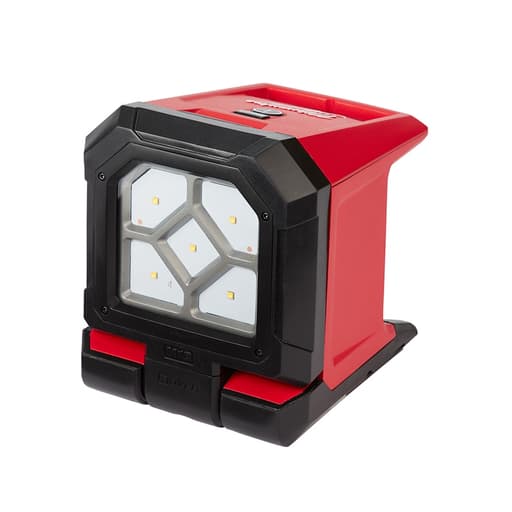
Features
- 1500 lumens output
- Up to 20 hours runtime with M18 XC5.0 battery pack
- Impact-resistant; survives drops up to 9 feet
- Three output modes for brightness/runtime optimization
- IP54 dust and water resistance
- Limited lifetime warranty on LEDs
Specifications
| Light Output | 1500 lumens |
| Runtime | Up to 20 hours with M18 XC5.0 battery pack |
| Impact Resistance | Survives drops up to 9 feet |
| Light Modes | 3 |
| Ingress Protection | IP54 |
| Warranty | Limited lifetime warranty on LEDs |
| Power Source | Compatible with M18 battery system |
Portable mounting flood light that delivers 1500 lumens. Designed for extended run time with compatible high-capacity battery packs (up to 20 hours with an M18 XC5.0 battery). Constructed to withstand impacts from drops up to 9 feet, offers three output modes to balance brightness and runtime, and has an IP54 rating for dust and water resistance. LEDs are covered by a limited lifetime warranty.
Milwaukee ROVER Mounting Flood Light Review
Why I keep reaching for this compact jobsite light
I’ve used a lot of portable lights that either blast out lumens without control or clamp well but fumble on runtime. The Rover light hits a practical middle ground: compact, bright enough for real work at 1500 lumens, and built for the knocks of day-to-day use. It’s part of the M18 ecosystem, so it shares batteries with a stack of common trades tools, and the head folds/rotates into positions that actually solve problems—under sinks, inside racks, across joists, or stuck to a panel.
It’s not perfect, and a few design choices get in the way depending on which battery you run. But as a portable, mount-anywhere task light, it’s become a regular in my kit.
Build, size, and ergonomics
The Rover light is on the small side for a 1500-lumen flood, and at a little over three pounds it’s genuinely portable. The housing feels dense and jobsite-ready. I’ve tossed it into a bin with drivers and blades without babying it, and it’s shrugged off the usual scrapes. Milwaukee rates it for 9-foot drops, and while I don’t test tools by throwing them off ladders, it has handled a few awkward knocks without complaint.
The handle is integrated into the frame. With a compact or mid-size battery, it’s easy to grab and go. With larger packs, the handle becomes more of a pinch grip than a full hand-through carry. That’s a recurring theme with this light: battery size directly affects ergonomics.
Light quality and output
On high, the beam is impressive for the size—broad, even flood with no distracting hotspots, and enough throw to light a midsize room or the inside of a panel cleanly. The color temperature sits in a neutral zone. It doesn’t skew blue or yellow, so wiring colors, finish tones, and markings read true. That matters a lot more than spec-sheet lumens when you’re actually identifying conductors or matching paint.
There are three output modes controlled by a single button. I’ve been living on medium for most tasks; it preserves runtime without feeling dim. Low mode is genuinely useful for close-in work where glare is the enemy. High is there when you need to flood a whole area quickly.
Mounting versatility: magnets and clamp
This light’s mounting system is the reason I bought it. You get two stout magnets and a spring-loaded clamp that opens to roughly two inches. Both are genuinely useful:
Magnets: Strong enough to hang the light from a steel rack or panel without fuss. Sticking it to the side of a server rack or breaker cover is quick and secure. The one quirk is orientation. The magnet sits opposite the hinge, so when the light is flush to a flat surface, aiming options narrow. You can still rotate and tilt, but you’ll occasionally want a bit of standoff (a rag, a shim, a bracket lip) to open up angles.
Clamp: Great for joists, ladder rungs, cart rails, or pipe. The spring is strong, the jaws have bite, and once it’s set you can reposition the head without the whole thing twisting loose.
Now for the caveat: larger M18 batteries intrude into the clamp’s opening and the space the magnets prefer. With mid to large packs, you literally reduce the clamp clearance and sometimes lose the ability to clamp over thicker materials. It’s workable with a 5.0Ah. With the higher-capacity bricks, plan on limited clamp use and tighter handle space. If mounting flexibility is the reason you’re buying this, pair it with compact or mid-size batteries.
Runtime and batteries
Milwaukee quotes up to 20 hours with an XC5.0. In the field, that lines up with low mode endurance. On medium I’ve comfortably covered a full day of intermittent work—think in-and-out task lighting without obsessing over the gauge. High mode understandably burns faster; figure several hours of steady output depending on battery size.
Battery choice genuinely changes the experience:
CP/compact packs: Best for clamp clearance and the most comfortable carry. Shorter runtime, but the light becomes more nimble.
XC5.0: The sweet spot. Enough runtime for a day of tasks with usable handle space and workable clamp clearance.
High-output 8.0/12.0: Great if you must have marathon runtime, but expect the clamp to be compromised and the handle to become a squeeze.
If your use case is set-it-and-forget-it on a magnetic surface, the larger packs are fine. If you rely on the clamp or handle a lot—attics, crawlspaces, ladder work—stick with 3.0–5.0Ah.
Controls and everyday use
The interface is dead simple: one button cycles modes, and the head pivots and rotates with enough detent to hold position but not so much resistance that you fight it. The light folds tight for transport and pops open quickly when you’re juggling other tools. That ease of setup is part of why I grab this over bulkier stand lights for quick jobs.
I also appreciate how the light spreads. It’s a true flood, not a narrow spot, and that makes it better for general task lighting. You can get it close to your work without washing everything out, especially on the lower settings.
Durability, weather, and heat
The IP54 rating is appropriate for jobsite use. I’ve used it in dusty mechanical rooms and during a light drizzle without issue. Keep the battery interface clean and you’re fine; it’s not a submersible and it’s not trying to be.
Heat-wise, the head warms up, as any high-output LED flood will. I’ve not seen discoloration or deformation. Common sense applies: don’t drape rags over it and give the front some breathing room.
The LEDs carry a limited lifetime warranty. That’s not a reason to abuse a tool, but it does speak to confidence in the light engine, which is usually the first thing to raise questions on cheap floodlights.
What I’d change
Battery interference: The biggest miss. A portable, mount-anywhere light should preserve its mounting features regardless of battery choice. A small standoff in the clamp geometry or a relocated handle slot would prevent larger packs from blocking the jaws and handhold.
Magnet orientation: A side magnet or a small offset pad would open up more aiming angles when mounted flush. Not a deal-breaker, but you will feel it in tight spaces.
Carry clearance: Even a slight scallop or deeper arc in the handle area would make it more glove-friendly with thicker packs installed.
None of these are fatal flaws, but they’re worth knowing before you buy—especially if you’re already invested in big M18 batteries.
Who it suits best
Service techs, electricians, IT/AV, and maintenance pros who bounce between spaces and need a compact flood that sticks, clamps, and points where you want it.
Remodelers and punch-list crews who value quick setup and a broad, even beam more than tripod height.
M18 users who can dedicate a CP or XC5.0 pack to the light to preserve mounting flexibility.
If you need hours of area lighting for a whole room or crew, a stand light still wins. If you need hands-free task lighting that can live in the bag and be deployed in seconds, the Rover light earns its keep.
Recommendation
I recommend the Rover light, with a clear caveat about battery choice. Paired with a compact or 5.0Ah pack, it delivers what matters most in a jobsite task light: bright, neutral illumination; strong magnets and a practical clamp; simple controls; and a tough, compact body that holds up to real use. If your workflow depends on high-capacity 8.0Ah or 12.0Ah batteries, expect compromised clamp clearance and a cramped handle. For many trades and service tasks, the sweet-spot setup—Rover light plus CP or XC5.0—makes this one of the most versatile grab-and-go work lights in the M18 lineup.
Project Ideas
Business
Mobile Event Lighting Rental
Offer short‑term rentals of portable light kits for pop‑up events, food trucks, and small outdoor weddings. Market packages (stand, diffuser, spare M18 batteries) that capitalize on the ROVER’s 1500 lumens brightness, long runtime, IP54 rating, and ruggedness—sell convenience to clients who need reliable, quick‑deploy lighting without electricians.
After‑Hours Inspection & Repair Service
Start a specialty service for contractors, property managers, and utilities: nighttime inspections, emergency repairs, and maintenance where powerful, portable lighting is essential. Use the ROVER to reduce setup time, offer bundled hourly rates that include on‑site lighting, and advertise the tool’s drop resistance and long battery life for reliable night work.
Jobsite Lighting Subscription for Contractors
Create a subscription program supplying durable, battery‑powered lights to small construction firms and remodelers. Provide pre‑charged M18 battery packs, stands, and replacement LEDs (backed by the limited lifetime LED warranty) on a weekly or monthly basis—reduce clients’ capital expense and generate recurring revenue.
Emergency Preparedness & Safety Kits
Assemble and sell emergency kits for businesses and homeowners that include the ROVER, spare M18 batteries, chargers, and mounting hardware. Position the product for storm response and power outages: highlight 1500 lumens brightness, up to 20‑hour run time, IP54 weather resistance, and rugged drop protection as key selling points for safety‑conscious customers.
Creative
Pop‑Up Portrait Studio
Build a collapsible mini studio for on‑location portraits and headshots: use the ROVER as a portable key or fill light mounted on a quick‑release bracket with a softbox/diffuser. Take advantage of three output modes to dial brightness for flattering skin tones and the M18 battery compatibility to shoot in venues with no power. The light’s impact resistance and IP54 rating make it durable for outdoor markets and festivals.
Light‑Painting Murals
Create long‑exposure light‑painting artwork by mounting the flood light on handheld rigs or motorized mounts to sweep across large surfaces. Use the lowest and mid output modes for layered effects and long runtimes (up to 20 hours) to complete multi‑stage pieces without recharging. The rugged housing lets you work in dusty or damp urban settings.
Illuminated Garden Sculptures
Design and install statement garden pieces that include a discreet mount for the ROVER to wash sculptures, pathways or water features. Programmed brightness and directional mounting provide dramatic night‑time displays; battery operation avoids trenching for power and IP54 protection keeps lights running through light rain.
Multi‑Use Camping & Workshop Kit
Assemble a versatile kit for makers: foldable stand, magnetic base, diffusers, and the ROVER for lighting tents, workbenches, or repairs. The three light modes give task or ambient lighting, long runtimes support multi‑day trips, and the drop resistance means it survives rough campsites or garage work.